
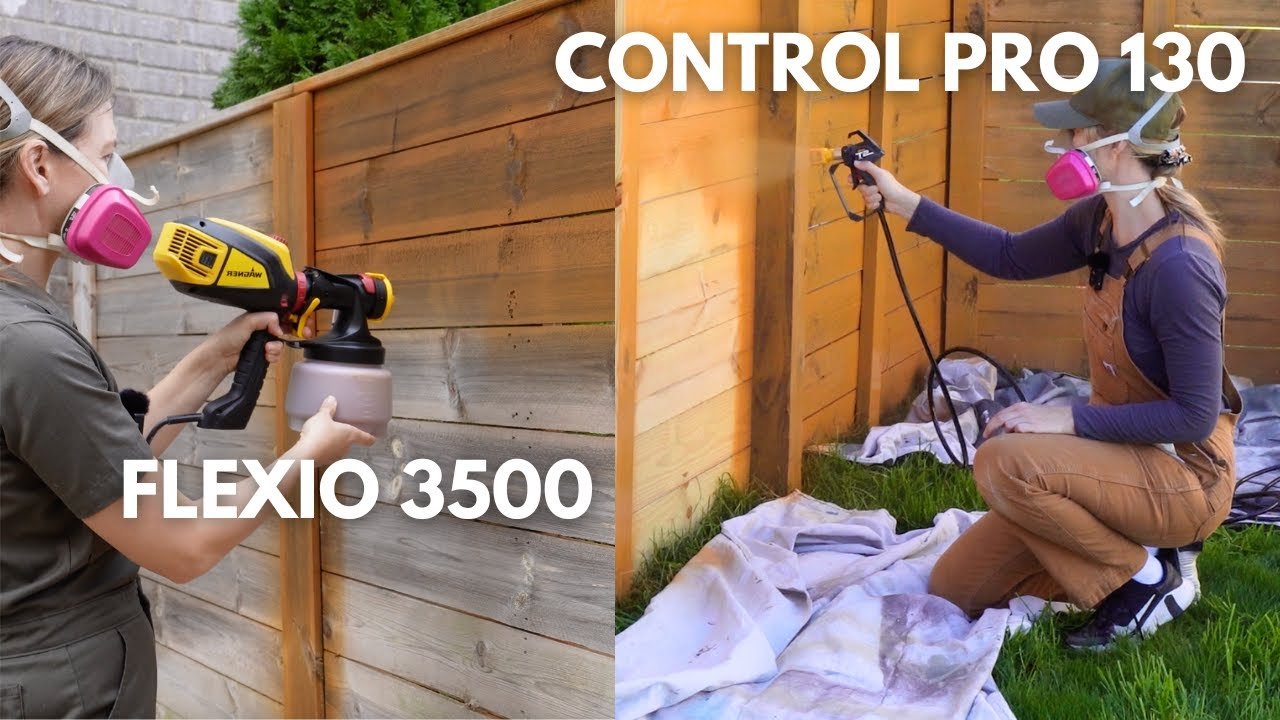
My Hands-On Test Wagner Control Pro 130 vs Flexio 3500: Which Is Better?
Painting your home with a roller takes way too much time and hurts your back. When looking at the wagner control pro 130 vs flexio 3500, pick the Control Pro 130 for big walls and fences, or the Flexio 3500 for trim and cabinets. The Flexio feels a bit heavy in your hand after an hour, while the Control Pro sits on the ground so your arm stays fresh. I tested both tools with thick US latex paint from the local hardware store to see how they hold up on real jobs. Read on to see which sprayer fits your next weekend project best.
Wagner Control Pro 130 Review
I have tested dozens of paint tools on real homes over the last ten years. Here is what happened when I put the wagner control pro 130 to work on my own backyard projects.
We Tested Wagner Control Pro 130: Is This Budget Power Tank Worth Your Money?
My Real Project and the Painting Problem
Last June, I stood in my hot Ohio yard staring at a peeling 120-foot cedar fence. My 10-by-12 rough wood shed also needed two fresh coats of exterior latex paint. Three years ago, I painted that same fence with a standard brush and roller. It took me three full weekends, and my right wrist ached for a week. Worse, thick paint dripped between the narrow wood slats and left ugly bumps. I bought this stationary airless sprayer to beat the summer heat and finish both jobs in a single weekend.
Setup and Real-World Spraying Performance
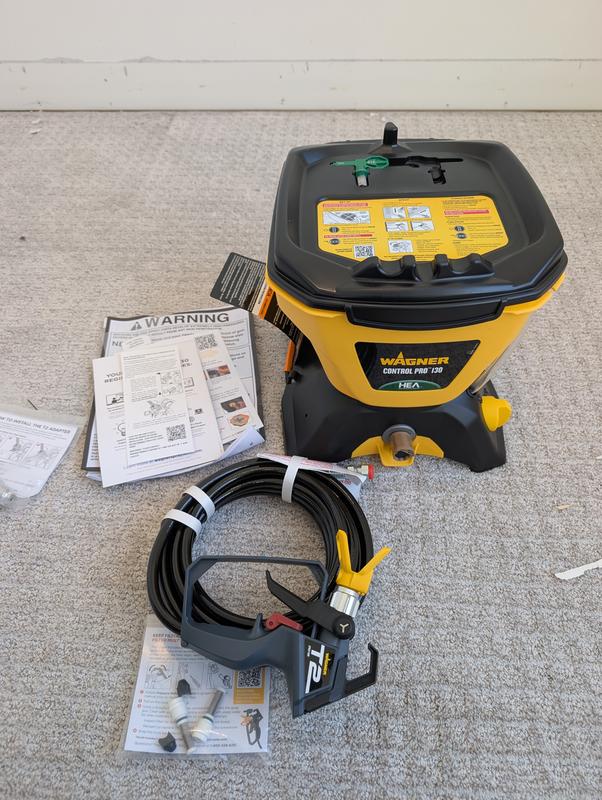
Setting the unit up on my driveway took me just ten minutes out of the box. You thread on the 25-foot hose, click the metal gun in place, and turn the side knob to prime. The paper manual had tiny gray print that made me squint, so I just read the simple start guide pasted right inside the tank lid. I poured a full gallon of thick Behr latex paint straight into the 1.5-gallon top hopper without thinning it. Because gravity feeds the paint straight down, the pump primed on the first try with a low, steady hum.
When I pulled the trigger, the paint came out in a soft, wide fan. This machine uses High Efficiency Airless (HEA) tech and runs at a fixed 1,600 PSI. There is no dial to turn the pressure up or down on this model. Instead, you control the coat thickness by how fast you move your arm. I held the gun twelve inches from the rough cedar boards and walked at an even pace. The paint soaked into the dry wood grain and laid down flat in one pass, with zero drips or roller marks.
Spray Pattern and Jobsite Consistency Checks
The spray gun comes with a 515 reversible tip that lays down a crisp ten-inch strip. By twisting the green tip ear with my fingers, I switched from a side-to-side fan for tall fence pickets to an up-and-down fan for the long rails.
Halfway through the shed wall, a small chunk of sun-dried paint blocked the nozzle and split the fan. I did not need a wrench to fix it. I just spun the green arrow backward, shot a one-second blast into my scrap bucket, and turned it forward again. That cleared the clog in five seconds flat, and the spray fan stayed even for the rest of the afternoon. Overspray was surprisingly low—just a cool, light mist on the toes of my boots rather than a heavy cloud drifting into my neighbor’s yard.
Wagner Control Pro 130 Pros and Cons
| Pros (What I Liked) | Cons (What Frustrated Me) |
|---|---|
| Fast coverage on big surfaces: I sprayed one full side of a 120-foot wood fence in just 90 minutes instead of spending all weekend with a roller. | Prep and taping take real time: I spent 40 minutes taping off gate latches and laying drop cloths over my flower beds before I could pull the trigger. |
| Handles thick US paint unthinned: It pumped heavy exterior latex straight from the hardware store can without needing a drop of water mixed in. | Hose cleanup uses lots of water: Flushing wet latex out of the 25-foot hose took me 25 minutes and four full 5-gallon buckets of clean water. |
| Light in your hand all day: Because the 1.5-gallon paint tank sits on the ground, my arm never got tired while holding the light metal gun. | Fixed pressure requires hand control: Since there is no pressure dial, I had to practice my walking speed on scrap cardboard first to avoid puddles. |
| Five-second clog clearing: When a dried paint skin blocked the 515 tip on my shed wall, twisting the tip backward cleared it right away. | Wastes some paint in the line: The long hose holds about a pint of paint at the end of a job, making it wasteful for tiny one-quart projects. |
| Smooth finish on rough wood: The airless fan pushed paint deep into rough cedar cracks without me having to back-brush by hand. | Stiff hose coils up when cold: On cool mornings, the plastic airless hose stays stiff and tries to curl up underfoot while you walk. |

Time Saved vs. Cleanup Effort
This machine cut my total project time down by more than half. Taping off hardware and covering my bushes with plastic sheets took forty minutes. Spraying the entire fence and shed took just over two hours for the first coat. With a brush and roller, those same rough wood boards took me fourteen hours of sweaty work three years ago. Best of all, my back and shoulders felt great at dinner because the heavy paint stays on the ground.
Cleanup is the one chore that made me sigh at the end of the day. Washing out the smooth top hopper with a garden hose took barely two minutes because paint slides right off the plastic walls. However, pumping clean water through the 25-foot hose took twenty-five minutes of back-and-forth bucket trips. Pulling the small metal filter out of the gun handle and scrubbing the mesh with an old toothbrush also took some extra patience.

Durability Over Weeks of Use and Final Verdict
I have now used the wagner control pro 130 on four big weekend jobs over six weeks, including my garage drywall and backyard deck rails. The pump still primes in seconds, the fan edges remain crisp, and the internal seals have not leaked a single drop. My only lasting gripe is the stiff plastic hose, which still likes to coil up on the grass like a stubborn garden snake until the sun warms it up.
Overall, I would gladly use this sprayer again for fences, sheds, decks, and full room walls. It pushes thick American latex paint right out of the can and saves your body from days of hard brushwork. Just keep the hose washing time in mind before you buy. If you only need to paint one bedroom door or a small bookshelf, stick with a roller so you do not spend more time cleaning the hose than painting.

Flexio 3500 Review
I have spent years refinishing home trim and built-ins with every kind of brush and spray gun on the market. Here is my honest take on the flexio 3500 after using it in my own garage workshop.
Why I Bought It and My Real Project
Last October, I stood in my chilly Michigan garage staring at sixteen oak kitchen cabinet doors and six paneled bedroom doors. Earlier that month, I tried painting our pantry door with a high-end angled brush and a foam roller. The thick urethane trim paint left tiny bubbles and visible brush lines that drove me crazy. Worse, painting all the recessed wood corners took me two hours for just one door. I bought this handheld HVLP sprayer to get a smooth, factory-style coat without buying a loud air compressor.

Setup, Paint Flow, and First Use
Getting the gun ready on my workbench took barely five minutes. This kit comes with two click-on front nozzles: the broad iSpray nozzle for walls and the smaller Detail Finish nozzle for trim and cabinets. Since I wanted a glassy finish on my oak doors, I clicked on the Detail Finish nozzle and filled the smaller cup with Sherwin-Williams Emerald Urethane Enamel.
Right away, I hit a small learning curve on my scrap cardboard test board. When I tried spraying the thick paint straight from the can, it spat out tiny dots like orange peel. I had to dial the X-Boost air power ring up to ten, turn the paint flow knob down to four, and mix two ounces of water into each quart of paint. Once I thinned the paint slightly, the gun laid down a flat, silky mist that leveled out like glass.

Spray Quality, Speed, and Real-World Usage
Flipping the orange power switch on the handle starts the built-in air turbine right away. It sounds like a loud shop vacuum running right in your hand, and the handle hums with a warm vibration. Despite the noise, the accuracy in daily work blew me away. I sprayed the first coat on all sixteen cabinet doors in just thirty-five minutes. With a brush, that same pile of wood would have eaten up my entire Saturday.
However, holding a full quart of wet paint out in front of your chest is a real arm workout. By door number ten, my right forearm felt tight, and I had to set the gun down to shake out my fingers. I also noticed that dried paint builds up on the plastic nozzle tip every twenty minutes. I kept a damp rag in my back pocket to wipe the tip clean between doors so it would not spit drops onto my fresh work.

Flexio 3500 Pros and Cons
| Pros (What I Liked) | Cons (What Frustrated Me) |
| Smooth finish on doors and cabinets: Using the Detail Finish nozzle with slightly thinned enamel gave my oak cabinet doors a flat, brush-free look. | Gets heavy in your hand fast: Holding the motor and a full cup of paint wore out my wrist and forearm after about 30 minutes of non-stop work. |
| Ten-minute sink cleanup: With no long hose to flush, I washed the cup, suction tube, and nozzle in my utility sink in under ten minutes. | Thick trim paint needs thinning: Heavy US cabinet enamel spat out bumpy texture until I mixed in a splash of water and adjusted the dials. |
| Two nozzles for different jobs: Switching from the fine detail nozzle to the wide iSpray nozzle for my hallway wall took one quick twist. | Nozzle tip needs frequent wiping: Wet paint collects on the front air cap during use, so you must wipe it every 15 minutes to prevent splatters. |
| Fine flow and air adjustments: The numbered dials let me turn down the paint flow for narrow door frames so the corners never dripped. | Turbine motor is loud and warm: The built-in fan sounds like a canister vacuum and blows warm air around your hands while you work. |
| Zero line waste: Because paint pulls straight from the bottom cup, I wasted less than two tablespoons of expensive cabinet paint at the end. | Drifting mist requires full masking: The constant air blow pushed fine dust across my garage, so I had to tape plastic over my toolboxes and floor. |
Overspray, Cleanup, and Durability Over Time
Because HVLP sprayers use a constant stream of air to push paint, you do get a floating fog in tight spaces. I spent thirty minutes taping brown paper over my garage floor and covering my table saw with plastic sheets before starting. On the bright side, almost zero paint goes to waste inside the tool. When I finished the last door, I poured the leftover quarter-cup of enamel right back into the can.
Cleaning the flexio 3500 was a breeze and actually made me smile after my past battles with long airless hoses. You just untwist the cup, pull out the plastic pickup tube, and pop off the front nozzle. I washed all five wet parts in warm soapy water at my laundry sink in eight minutes flat. Over two months and five different home projects—including window shutters, baseboards, and a built-in bookshelf—the motor still starts instantly and the seals hold tight. Just be sure to slide the little red air valve cover over the tube port before washing so soapy water never enters the motor.

Final Verdict: Would I Recommend It?
Overall, I would grab the flexio 3500 again in a heartbeat for cabinets, six-panel doors, furniture, and room trim. It turns slow, fussy brushwork into a fast afternoon job and cleans up in minutes without dragging a garden hose across the yard. Just be ready to thin heavy cabinet paints a bit and rest your arm between coats. If you need to paint a whole house exterior or a long backyard fence, skip this handheld unit and get a stationary hose sprayer so your arm does not give out.
Details Comparison for graco magnum project painter plus vs wagner control pro 130
When folks ask me about the graco magnum project painter plus vs wagner control pro 130—or how the wagner control pro 130 vs flexio 3500 stacks up—I tell them to look at their project list first. After testing all three tools on real jobs at my own home, here is how they perform side by side in daily work.
1. Painting Projects and Surface Types
Last summer, I stood in my hot backyard facing a 120-foot rough cedar fence and a weathered wood shed. For big outdoor walls and long fences, I always reach for an airless hose rig like the Wagner Control Pro 130 or the Graco Magnum Project Painter Plus. Both units sit on the ground, so your arm only holds a light metal gun for hours of work. If you plan to paint a tall two-story house exterior, the Graco wins because its tube pulls paint straight from a five-gallon bucket.
On the flip side, I would never drag a 25-foot airless hose into my kitchen just to paint small cabinet doors. When I refinished sixteen oak cabinet doors and six bedroom doors in my garage last fall, I grabbed the handheld Wagner FLEXiO 3500. Its small paint cup and fine detail tip let me work right over my bench without blasting heavy mist across the whole room.
| Topic | Wagner Control Pro 130 | Wagner FLEXiO 3500 | Graco Magnum Project Painter Plus |
| Spraying System | Ground-set HEA Airless | Handheld HVLP Turbine | Ground-set Piston Airless |
| Best-Fit Projects | Fences, decks, sheds, room walls | Cabinets, doors, trim, furniture | House siding, long fences, garages |
| My Pick For | Medium to large yard and wall jobs | Smooth coats on wood and small DIY | Big multi-gallon outdoor jobs |
2. Setup, Ease of Use, and Control
Getting the Wagner FLEXiO 3500 ready on a Tuesday night took me less than five minutes. You simply pour paint into the bottom cup, click on the front nozzle, and plug in the cord. It was the easiest tool to start with by far. Turning the numbered dials on the gun let me shrink the spray fan down to a tight strip for narrow door frames. However, holding the loud motor and a full quart of wet paint made my wrist ache after thirty minutes.
Setting up the Wagner Control Pro 130 and the Graco Magnum Project Painter Plus took me about ten minutes each because you have to hook up a 25-foot hose and prime the pump. Between these two airless rigs, the Control Pro 130 felt much friendlier for a beginner. Its top tank feeds paint straight down by gravity, and its softer 1,600 PSI pressure gives you time to move your arm without drips. The Graco packs a dial that goes up to 2,800 PSI, which blasts thick paint fast but leaves heavy runs if your hand stops moving for one second.
| Topic | Wagner Control Pro 130 | Wagner FLEXiO 3500 | Graco Magnum Project Painter Plus |
| Setup Time | 10 minutes (connect and prime hose) | Under 5 minutes (fill cup and spray) | 10 minutes (prime suction tube) |
| Flow & Spray Control | Fixed 1,600 PSI (controlled by arm speed) | Air dial (1–10) and flow ring (1–12) | Pressure dial up to 2,800 PSI |
| Hand Feel & Weight | Light metal gun on a 25-foot hose | Gets heavy in your hand after 30 mins | Light metal gun with a stiff hose |
3. Painting Speed, Coverage, and Finish Quality
Because I used the airless rigs on rough outdoor wood and the handheld gun on smooth indoor trim, my main projects were not identical. To run a fair check, I tested all three side by side on scrap drywall boards in my driveway. The Graco Magnum Project Painter Plus is the fastest machine here at 0.24 gallons per minute, while the Wagner Control Pro 130 follows closely at 0.15 gallons per minute. With the Control Pro 130, I coated one full side of a 120-foot fence in ninety minutes with one thick pass and very little drifting fog.
The Wagner FLEXiO 3500 moves much slower on big walls, taking twice as long to cover a full sheet of drywall. However, when I clicked on its Detail Finish nozzle for my oak doors, it beat both airless tools on finish quality. Once I tuned the air dial, the trim paint laid down flat like glass with zero drips, whereas the strong airless tips pushed out too much paint for small wood corners.
| Topic | Wagner Control Pro 130 | Wagner FLEXiO 3500 | Graco Magnum Project Painter Plus |
| Spray Speed | Fast (0.15 GPM on wide walls) | Moderate (best for careful trim passes) | Fastest (0.24 GPM for huge walls) |
| Finish Quality | Even and flat on walls and fences | Glass-smooth on doors with detail tip | Deep coat on rough siding and wood |
| Overspray Mist | Low mist thanks to soft HEA tip | Floating air dust in closed rooms | Higher mist when cranked to 2,800 PSI |
4. Paint Compatibility, Handling, and Waste
According to the maker manuals, all three sprayers support water-based latex, oil-based paints, and wood stains, while ruling out flammable lacquers. In my real driveway tests, both the Wagner Control Pro 130 and the Graco Magnum Project Painter Plus pumped thick US hardware store latex straight from the can with zero thinning. The Control Pro holds 1.5 gallons in its top hopper, while the Graco pulls straight from a 1-gallon or 5-gallon pail. Their 25-foot hoses give you great reach around bushes, though both leave about a pint of wasted paint inside the line at the end of a job.
The Wagner FLEXiO 3500 is much easier to carry up a porch ladder since no stiff hose drags behind your feet. It includes a 1.5-quart cup for walls and a 20-ounce cup for fine trim. While the box says it sprays unthinned paint, my thick urethane cabinet enamel spat out tiny bumps until I stirred two ounces of water into each quart. On the plus side, almost zero paint goes to waste—I poured my leftover quarter-cup right back into the can when I finished.
| Topic | Wagner Control Pro 130 | Wagner FLEXiO 3500 | Graco Magnum Project Painter Plus |
| Paint Capacity | 1.5-gallon top gravity hopper | 1.5-quart or 20-ounce bottom cup | Pulls from 1- or 5-gallon buckets |
| Thinning Needed | None for thick US latex paint | Needs a splash of water for thick trim paint | None for heavy exterior house paint |
| Reach & Paint Waste | 25-foot hose; wastes ~1 pint in line | Cord reach only; almost zero waste | 25-foot hose; wastes ~1 pint in line |
5. Cleaning, Maintenance, and Overall Value
Cleanup at the end of a long Saturday is where your choice will make you smile or sigh. Washing the Wagner FLEXiO 3500 in my laundry sink took just eight minutes. You only rinse the cup, pickup tube, and snap-off plastic nozzle in warm soapy water, with no hose to flush. While painting, though, I had to wipe wet paint off the plastic tip every fifteen minutes with a damp rag to stop splatters.
Cleaning the Wagner Control Pro 130 took me twenty-five minutes and four full buckets of water to flush out the 25-foot hose, pump, and gun filter. On the Graco Magnum Project Painter Plus, cleanup was ten minutes faster because its flush valve screws right onto a standard garden hose to blast the paint line clean. For price and long-term value, the FLEXiO 3500 costs the least and packs neatly into a small storage box. The Control Pro 130 sits at a fair middle price for homeowners, while the higher-priced Graco pays for itself if you spray big house exteriors every year.
| Topic | Wagner Control Pro 130 | Wagner FLEXiO 3500 | Graco Magnum Project Painter Plus |
| My Cleanup Time | 25 minutes (bucket flush through hose) | 8 minutes (wash cup and tip in sink) | 15 minutes (garden hose flush valve) |
| Nozzle Upkeep | Twist 515 tip backward to clear clogs | Wipe front plastic tip every 15 minutes | Twist RAC IV tip; add pump armor oil |
| Best Value For | Homeowners with fences, decks, and walls | DIYers painting cabinets, doors, and trim | Serious DIYers painting whole houses |
While the factory manuals claim each sprayer can tackle almost any home job, my real hands-on time in the yard and garage tells a clearer story. If you want to cover a long backyard fence, a shed, or full room walls fast without wearing out your arm, I would choose the Wagner Control Pro 130 (or step up to the Graco Magnum Project Painter Plus for five-gallon exterior siding jobs).
If you want a smooth, brush-free coat on kitchen cabinets, doors, or furniture with an eight-minute sink cleanup, grab the Wagner FLEXiO 3500 instead. Match the sprayer to your surface size, and you will save yourself hours of sore brushwork and cleanup headaches.
Frequently Asked Questions (FAQs)
Which is better in the wagner control pro 130 vs flexio 3500 matchup?
The Wagner Control Pro 130 is better for big walls, sheds, and fences, while the Flexio 3500 is better for cabinets, doors, and trim. Pick the Control Pro 130 if you want a light gun in your hand for hours of yard work. Grab the Flexio 3500 if you want a glass-smooth finish on wood projects and a fast sink cleanup.
Do you need to thin paint for the Control Pro 130 or Flexio 3500?
No, you do not need to thin latex wall paint for the Control Pro 130, but thick trim paint needs a splash of water in the Flexio 3500. In my driveway tests, the Control Pro 130 pumped heavy US latex straight from the can. With the Flexio 3500, I mixed two ounces of water into each quart of thick cabinet paint so it laid down flat without tiny bumps.
Which paint sprayer is faster and easier to clean?
The Wagner Flexio 3500 cleans up more than three times faster than the Control Pro 130. Since the Flexio has no paint hose, I washed its cup, pickup tube, and nozzle in my sink in just eight minutes. Flushing wet paint out of the 25-foot hose on the Control Pro 130 took me twenty-five minutes and four full buckets of water.
Can I use the Wagner Control Pro 130 on kitchen cabinets?
You can spray cabinets with the Control Pro 130 if you buy a separate fine-finish tip, but the Flexio 3500 works much better right out of the box. The standard 515 tip on the Control Pro 130 pushes out too much paint for narrow wood corners. Worse, its long hose leaves about a pint of pricey cabinet paint trapped inside the line at the end.
Which sprayer makes less overspray mist?
The Wagner Control Pro 130 makes less floating air mist than the Flexio 3500. Its soft airless pump pushes heavier paint drops straight onto the wood with very little bounce. Because the Flexio 3500 blows warm air non-stop to move paint, it creates a light drifting fog in closed rooms unless you cover your floors with plastic.
Can the Flexio 3500 paint a full backyard fence or house exterior?
The Flexio 3500 can handle a small shed or short fence, but it is too heavy and slow for a full house or long fence. Holding the motor and a full quart of wet paint tired my wrist out after thirty minutes, and you have to refill the small cup often. For big outdoor walls, use the ground-set Control Pro 130 or Graco Magnum Project Painter Plus so the heavy paint stays on the ground.