The Ultimate Guide to Spray Gun Nozzle Types (Choose The Right One For Next Project)
Choosing the right spray gun nozzle can make the difference between a smooth, clean finish and a surface covered with runs, dry spray, or orange peel. The nozzle controls how much coating leaves the gun, how wide the spray pattern becomes, and how finely the material breaks into droplets. In simple terms, it acts like the mouth of the spray gun.
Spray gun nozzles come in many forms. Some use millimeter sizes, such as 1.3 mm or 2.5 mm. Others use airless tip numbers, such as 515 or 619. These numbers are not interchangeable, so it is easy to buy the wrong part. This guide explains spray gun nozzle types, sizes, uses, care, and common problems in clear US English.

What Are the Different Types of Spray Gun Nozzles?
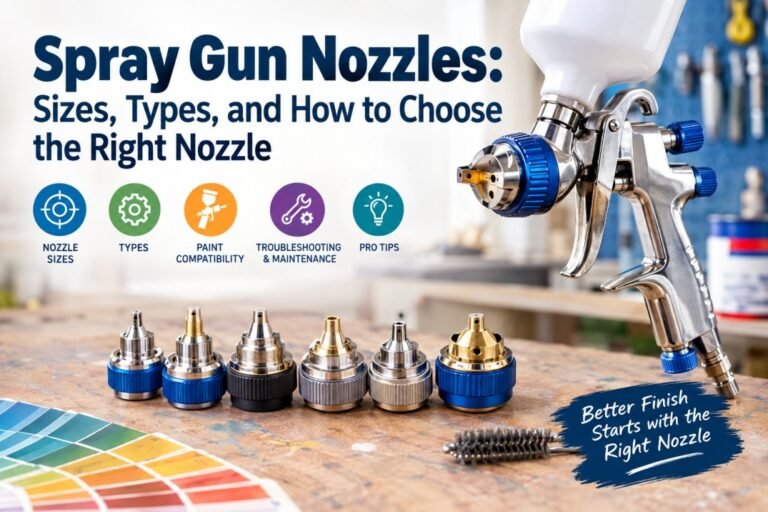
A spray gun nozzle is part of a system that includes the fluid nozzle, needle, air cap, and spray tip. The exact design depends on the gun type. Conventional, HVLP, and LVLP guns often use a fluid nozzle with an air cap, while airless guns use a single spray tip to shape the coating.
The best nozzle depends on the coating, surface, finish, and spray gun. Thin stain may need a small opening. Thick primer may need a much larger one. Always check the spray gun maker’s chart before relying on a general size guide.
Round Spray Nozzles
Round spray nozzles produce a round or nearly round spray pattern. They work well for small parts, narrow areas, touch-up jobs, and detailed work. A round pattern also gives the user good control when coating edges, rails, brackets, and small furniture parts.
These nozzles are not usually the first choice for large flat surfaces. A round pattern can create overlap lines if the user moves too slowly or holds the gun too close. Use steady passes and keep the gun at a right angle to the surface.
Flat Fan Spray Nozzles
Flat fan nozzles create a wide, oval-shaped spray pattern. They are common for cabinets, doors, walls, vehicle panels, and other broad surfaces. The fan shape helps the painter cover more area with each pass.
A flat fan nozzle must be held square to the work. If the gun tilts, one side of the fan can lay down more paint than the other. This can cause heavy edges, light centers, or uneven gloss.
HVLP Spray Gun Nozzles and Air Caps
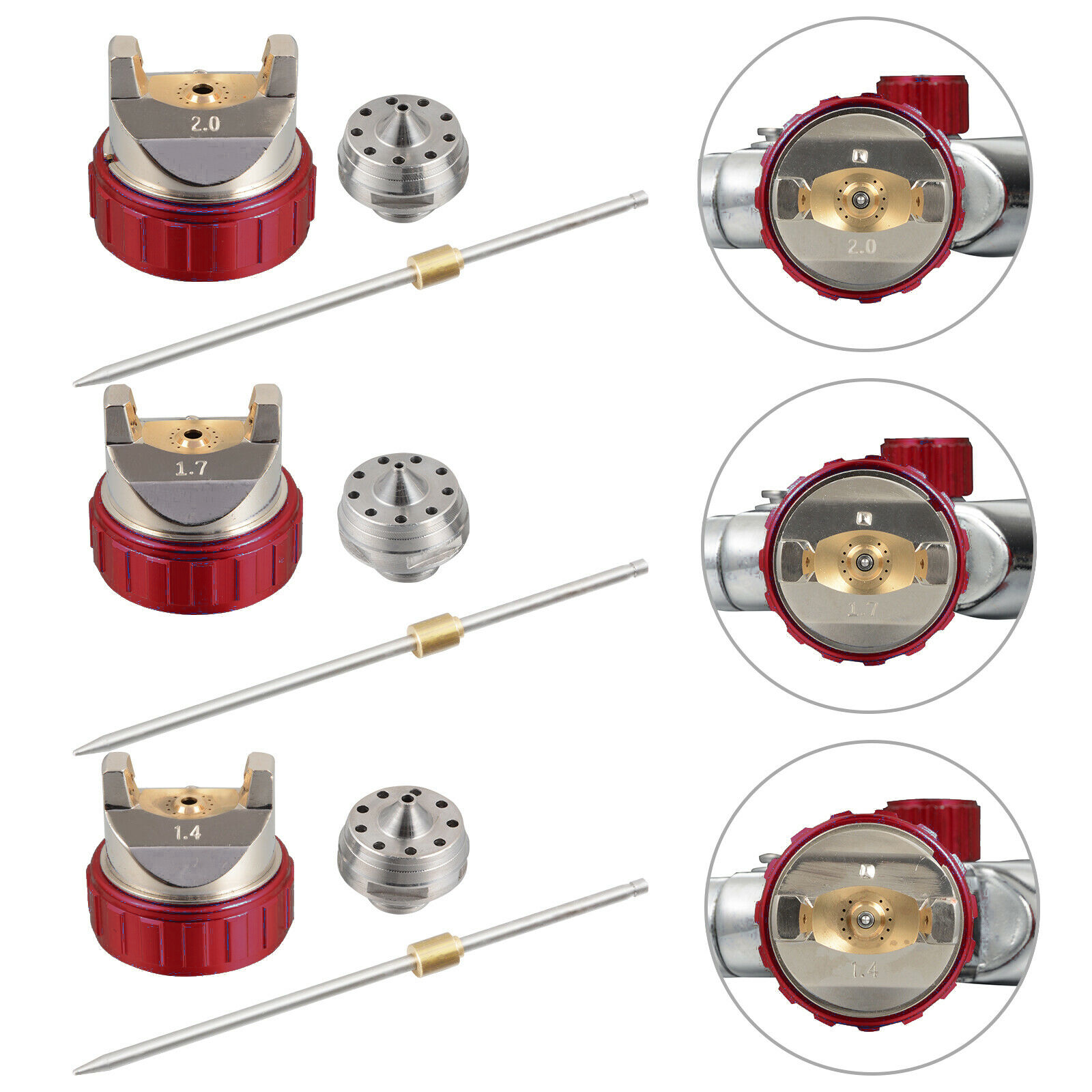
HVLP means high volume, low pressure. An HVLP gun uses a large volume of air at lower pressure to atomize paint. It often has separate fluid nozzle and air cap sizes, and both parts must match the gun model.
HVLP nozzles are popular for furniture, trim, cabinets, and automotive refinishing. They can reduce overspray, but they may apply less material per minute than a high-pressure conventional gun. Thick coatings may need thinning, a larger nozzle, or a stronger turbine.
Airless Spray Gun Tips
Airless spray tips use fluid pressure rather than compressed air to atomize paint. The tip has a small hole and a fan-shaped opening. The pump forces paint through the hole at high pressure, creating a spray pattern.
Airless tips use a three-digit code. The first digit shows about half the fan width at 12 inches, while the last two digits show the orifice size in thousandths of an inch. For example, a 515 tip creates about a 10-inch fan and has a 0.015-inch orifice.

Fine-Finish and Specialty Nozzles
Fine-finish nozzles are made for a soft, controlled spray. They often use a smaller fluid opening, a special air cap, or a pre-atomizing design. These parts help reduce texture on clear coat, lacquer, stain, enamel, and cabinet paint.
Specialty nozzles also include detail tips, texture tips, plural-component tips, and tips for abrasive coatings. A detail nozzle may suit models and trim. A texture nozzle may have a large opening to pass heavy wall texture or popcorn material.

Spray Gun Nozzle Size Chart: What Do the Numbers Mean?
Nozzle numbers describe different things based on the spray system. A 1.3 mm fluid nozzle and a 413 airless tip do not measure the same feature. The first is a fluid opening in millimeters, while the second uses a fan code and an orifice measurement.
Manufacturers may list a recommended pressure, fluid flow, fan width, and viscosity range with each size. These details matter because the same nozzle can behave differently with different paint, pressure, temperature, and gun design.

Common Conventional and HVLP Fluid Nozzle Sizes
The table below gives common starting points. It is a guide, not a fixed rule. The product label and spray gun manual should always have the final say.
| Fluid nozzle size | Common use |
|---|---|
| 0.8–1.0 mm | Detail work, thin stain, dye, touch-up |
| 1.2–1.3 mm | Basecoat, clear coat, thin enamel, fine finish |
| 1.4–1.5 mm | General automotive paint, sealers, many finishes |
| 1.6–1.8 mm | Enamel, single-stage paint, light primer |
| 1.9–2.2 mm | Primer, latex, thicker enamel |
| 2.3–2.5 mm | Heavy primer, high-build coatings |
| 2.6–3.0 mm | Thick paint, texture, specialty coatings |
A smaller opening gives better control with thin material, but it may clog with thick paint. A larger opening moves more material and may create larger droplets. The correct size is the one that gives full atomization without forcing excessive pressure or heavy thinning.
How to Read Airless Spray Tip Numbers
An airless tip marked 515 is read as “five fifteen.” The first number is multiplied by two to estimate the fan width at 12 inches, so 5 means about 10 inches. The last two numbers show the orifice size in thousandths of an inch, so 15 means 0.015 inch.
A 311 tip creates about a 6-inch fan with a 0.011-inch opening. A 619 tip creates about a 12-inch fan with a 0.019-inch opening. Actual fan width changes with pressure, paint, gun distance, and wear.
Fluid Nozzle Size vs. Airless Tip Size
Fluid nozzle sizes belong to compressed-air spray guns, including conventional, HVLP, and LVLP models. They are measured in millimeters and work with a matching needle and air cap. Airless tip sizes belong to airless pumps and use the three-digit code.
Do not place an HVLP fluid nozzle in an airless gun. The parts use different designs, pressures, and connections. Even within one system, parts from different brands may not seal or atomize correctly.
Spray Gun Nozzle Types for Different Paints and Coatings
Paint viscosity is one of the strongest factors in nozzle choice. Thin material flows through a small opening with ease. Thick material needs more space, more pressure, or both.
Temperature also changes viscosity. Cold paint often becomes thicker, while warm paint flows more freely. Use the coating maker’s technical data sheet when possible, and test the paint on scrap before starting the real job.
Best Nozzle Types for Latex and Emulsion Paint
Latex and emulsion paint are water-based coatings that can be fairly thick. An HVLP gun may use a 1.8–2.5 mm fluid nozzle, depending on the paint and the gun. An airless sprayer often uses a 515, 517, or 519 tip for broad surfaces.
Some latex paint must be strained and thinned for an HVLP gun. Do not thin by guesswork alone. Add small amounts of the approved reducer, mix well, and test the spray pattern after each change.
Best Nozzle Sizes for Wood Stain and Varnish
Wood stain is usually thin and works with a 0.8–1.3 mm nozzle on many compressed-air guns. Water-based stain may need a slightly different setup than oil-based stain. Clear varnish often works well with a 1.2–1.4 mm nozzle when the product is properly reduced.
A small nozzle helps control stain and limits waste. Move quickly and keep the coat light. Heavy stain can pool in corners and create dark patches that are hard to remove.

Best Nozzle Types for Primer
Primer is often thicker than topcoat. A 1.6–2.2 mm fluid nozzle is a common starting range for many primers. High-build primer may need a 2.0–2.5 mm nozzle or a special primer setup.
For airless spraying, a 515 or 517 tip may suit many general primers, while high-build products may call for a larger tip. Confirm the product recommendation because some primers contain fillers that can clog a small opening.
Best Nozzle Sizes for Automotive Paint
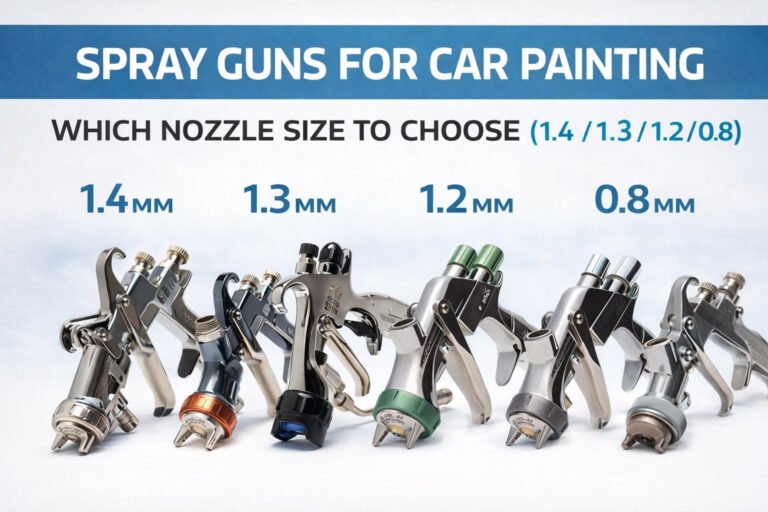
Automotive basecoat and clear coat often use a 1.2–1.4 mm nozzle. Single-stage urethane may work with a 1.3–1.5 mm nozzle, depending on the product and spray gun. Primer surfacer usually needs a larger opening, often around 1.7–2.2 mm.
Automotive finishes are sensitive to atomization. A nozzle that is too large can cause wet, heavy coats. A nozzle that is too small can create dry spray, poor flow, or an uneven metallic pattern.
Best Nozzles for Enamel and Oil-Based Paint
Enamel and oil-based paint vary a great deal in thickness. Thin enamel may work with a 1.3–1.5 mm nozzle, while heavy enamel may need a 1.6–2.0 mm opening. An airless setup may use a 413, tip, or a larger tip based on the product.
Use the correct solvent for cleanup and thinning. Oil-based material can dry inside the fluid passage and turn a good nozzle into a blocked one. Clean the gun as soon as the work ends.
Best Nozzles for Thick Paint and High-Viscosity Coatings
High-viscosity coatings need a larger fluid path. Texture paint, elastomeric coatings, block filler, and some roof coatings may need a 2.5–3.5 mm fluid nozzle or a large airless tip. The pump must also have enough output to maintain pressure.
A large nozzle alone cannot solve every flow problem. A weak compressor, small hose, clogged filter, cold paint, or poor material can still cause a rough spray. Check the whole system, not just the tip.
Spray Gun Nozzle Types by Spray Gun System
The spray gun system controls the type of nozzle you can use. Conventional, HVLP, and LVLP guns atomize paint with air. Airless guns use pump pressure. Electric sprayers may use a small pump, turbine, or airless motor.
Each system has a different balance of speed, control, transfer efficiency, and overspray. Choosing a nozzle without considering the system is like choosing a tire without checking the vehicle.

Conventional Spray Gun Nozzles
Conventional guns use higher air pressure to break paint into fine droplets. They can produce excellent atomization and a smooth finish. They also create more overspray and may require a larger compressor.
A 1.3–1.8 mm nozzle range covers many general jobs. The gun’s air cap, fluid tip, needle, pressure, and paint reduction must work as one matched set.
HVLP Spray Gun Nozzles
HVLP guns use more air at lower pressure near the cap. They are common in shops and home workshops because they can improve transfer efficiency and reduce overspray. They work well for trim, cabinets, furniture, and many automotive coatings.
HVLP guns may need a larger nozzle than conventional guns for the same coating. The lower atomizing pressure can make thick paint harder to break into fine droplets. A larger tip, warmer material, or approved thinning may help.
LVLP Spray Gun Nozzles
LVLP means low volume, low pressure. LVLP guns need less air than HVLP models and can work with smaller compressors. They often give a soft spray and good control for small to medium projects.
The nozzle range is similar to HVLP, but the result depends on the specific gun. A 1.3–1.5 mm tip may suit thin finish coats, while a 1.8–2.0 mm tip may suit primer or thicker paint.
Airless Spray Gun Tips
Airless tips are built for high fluid pressure. They cover large areas quickly and can spray many wall paints, primers, stains, and protective coatings with little or no thinning. The tip size controls both output and pattern width.
Airless tips wear faster with abrasive coatings. Paint containing silica, fillers, or metal particles can enlarge the orifice. As the opening wears, the spray becomes wider, heavier, and less even.
Electric Paint Sprayer Nozzles
Electric paint sprayers may use a small airless pump, HVLP turbine, or a handheld system. Their nozzles are often proprietary. Some models use color-coded tips, while others use millimeter sizes.
Read the product manual before buying a replacement. A tip that looks similar may have a different seal, thread, needle seat, or spray angle. Electric units also have limited flow, so very thick paint may not work well even with a large tip.
How to Choose the Right Spray Gun Nozzle Size
Start with the coating maker’s recommendation. Then consider the surface, desired finish, spray method, and compressor or pump capacity. A nozzle is only one part of the equation, but it is a key part.
When in doubt, choose the smallest size that can pass the material without clogging or creating poor atomization. This often gives better control. For thick products, move up in size instead of trying to force them through a small opening.
Choose a Nozzle Based on the Paint Type
Read the label for viscosity, thinning instructions, and recommended tip range. Thin clear coats and stains usually need small openings. Primers, latex, and texture coatings usually need larger openings.
Use a paint strainer with many coatings, especially after thinning. A small lump can block a fine nozzle. Straining does not replace cleaning, but it removes many particles before they enter the gun.
Choose a Nozzle Based on the Surface
Small surfaces need control more than speed. Use a narrow fan or small fluid nozzle for chair legs, trim, metal brackets, and small parts. Large walls, fences, and vehicle panels benefit from a wider fan and higher output.
The surface also affects the risk of runs. Vertical surfaces need controlled coats. A nozzle that delivers too much material can make the paint sag before it levels.
Choose a Nozzle Based on the Finish
A fine finish needs fine atomization and controlled fluid flow. Smaller fluid nozzles and fine-finish air caps often help with clear coat, lacquer, cabinet enamel, and automotive paint. Use several light coats rather than one heavy coat.
A textured finish uses a different goal. Texture tips and large openings keep the material coarse. In this case, a smooth mist is not the target.
Choose a Nozzle Based on Your Spray Gun Model
Check the model number, fluid tip design, needle set, air cap, and manufacturer chart. Some guns require a complete matched set. Others let you change only the fluid nozzle.
Do not assume that all 1.4 mm nozzles fit all guns. The diameter may match while the thread, seat, length, or needle design does not. The wrong part can leak or damage the gun.
How to Test Whether Your Nozzle Is the Right Size
Spray onto cardboard, masking paper, or a test panel. Hold the gun at the distance listed by the maker, keep it square, and move at a steady speed. Look for a full fan with fine, even droplets.
The material should lay down wet enough to flow but not so wet that it runs. If the spray is rough, check pressure, paint reduction, filters, and distance before changing the nozzle. Make one adjustment at a time.
Spray Gun Nozzle Sizes for Common DIY Projects
DIY projects often use a wide range of coatings. Cabinet enamel is not the same as wall paint, and deck stain is not the same as clear lacquer. A single “best nozzle” does not exist for every job.
The ranges below offer useful starting points. Always test first, protect nearby areas, and follow the coating label.
Nozzle for Painting Kitchen Cabinets
A 1.3–1.5 mm HVLP or LVLP nozzle is a common starting point for cabinet enamel and water-based trim paint. Some thick cabinet coatings may need a 1.6–1.8 mm nozzle. A fine-finish air cap can help reduce texture.
Clean the doors well and sand between coats as directed. Cabinet painting rewards patience. A small, even spray is better than rushing with a large tip.
Nozzle for Painting Furniture
Furniture projects may use a 1.2–1.5 mm nozzle for stain, lacquer, enamel, or clear finish. Detailed pieces may benefit from a small round or detail nozzle. Thick chalk-style paint may need a larger opening after proper thinning.
Spray edges first, then broad faces. Keep the gun moving before pulling the trigger, and release the trigger before stopping. This simple rhythm helps prevent heavy spots.
Nozzle for Painting Walls and Ceilings
An airless sprayer often uses a 515, 517, or 619 tip for interior wall paint. The right choice depends on the paint thickness and the desired fan width. A 515 is a common general starting point for many latex paints.
Use a smaller tip for narrow areas and a larger fan for broad walls. Keep the gun about 12 inches from the surface when the manual supports that distance. Overlap each pass by about 50 percent.
Nozzle for Painting Fences and Decks
Deck stain often works with a 0.013–0.015-inch airless tip or a small HVLP nozzle. Solid stain may need a larger airless tip than clear or semi-transparent stain. The wood surface can absorb material quickly, so avoid excessive buildup.
Back-brush stain when the product instructions call for it. This pushes the coating into cracks and evens out the color. Protect plants, siding, and nearby surfaces from overspray.
Nozzle for Doors, Trim, and Window Frames
A 1.2–1.5 mm fluid nozzle often suits trim enamel, door paint, and clear finishes. An airless sprayer may use a narrow 211, 311, or 313 tip for these areas. A narrow fan gives better control near glass and walls.
Mask carefully and spray thin coats. On vertical trim, a slow pass with a large tip can create runs. Keep your wrist straight and move your whole arm.
Nozzle for Cars and Automotive Parts
Automotive basecoat and clear coat often use a 1.2–1.4 mm nozzle. Primer may need 1.7–2.2 mm. Small parts can use a detail gun with a smaller tip if the finish product allows it.
Follow the paint maker’s mixing ratio and flash time. Automotive coatings can be hazardous, so use the required respirator, ventilation, gloves, eye protection, and spray booth controls.
Spray Gun Nozzle Types Compared: Which One Should You Buy?
The best nozzle is not always the most expensive one. It must match the gun, coating, and job. A premium nozzle used with the wrong pressure or paint can perform worse than a basic nozzle used correctly.
Think of the purchase as a match between four parts: the paint, the gun, the surface, and the finish. If one part changes, the ideal nozzle may change too.
Fine-Finish Nozzles vs. Standard Nozzles
Fine-finish nozzles aim to create smaller, more even droplets. They can improve the look of smooth surfaces such as cabinets, furniture, and automotive panels. They are often worth the cost when surface texture matters.
Standard nozzles are more flexible and may handle a wider range of coatings. They are a practical choice for general maintenance, fences, walls, and shop work. They may also be easier to clean and replace.
HVLP Nozzles vs. Airless Spray Tips
HVLP nozzles offer strong control and good transfer efficiency. They suit smaller jobs and detailed finishes, but they can be slow on large surfaces. Thick paint may need reduction or a larger tip.
Airless tips cover large areas fast and handle many thick coatings. They produce more overspray and need careful pressure control. Airless equipment also works at high pressure, so safety is critical.
Reversible Airless Tips vs. Standard Airless Tips
A reversible airless tip can be turned to clear a clog. The operator switches the tip to the cleaning position, sprays briefly, then returns it to the normal position. This saves time during large jobs.
A standard tip may offer simple, reliable operation and can cost less. Neither type excuses poor filtering or poor cleaning. A clogged tip should be cleared safely, never with a hand or finger.
OEM Nozzles vs. Compatible Replacement Nozzles
OEM means original equipment manufacturer. OEM nozzles are made for a specific gun or sprayer and usually have reliable fit and performance. They may cost more, but they reduce guesswork.
Compatible parts can offer good value when made by a trusted supplier. Check dimensions, seals, pressure rating, material, and model fit. The cheapest part may wear quickly or produce an uneven pattern.
When Is It Worth Buying a Replacement Nozzle Kit?
A kit is useful when you spray several types of coating. A small set may include a fine tip, a general-purpose tip, and a larger primer tip. This can cost less than buying each part later.
A kit also helps when one nozzle is damaged or lost. Buy a set only if every size fits your gun and suits your likely work. Extra parts are not useful if they sit unused or cannot handle your coatings.
How to Change a Spray Gun Nozzle Safely
Spray equipment can hold pressure after the trigger is released. Airless equipment is especially dangerous because high-pressure fluid can enter skin. Always follow the manufacturer’s pressure relief procedure before touching a tip or fluid part.
Wear eye protection and work in a clean area. Keep solvent away from flames and provide strong ventilation. Safety is not a side task; it is part of the nozzle change.
Tools and Parts You May Need
You may need a wrench, nozzle tool, soft cleaning brush, approved solvent, new gasket, needle, fluid nozzle, air cap, or airless tip guard. Some guns include a special tool that prevents damage to the fluid nozzle.
Use the correct tool size. Adjustable pliers can crush soft parts and mark sealing surfaces. Keep small parts in a tray so they do not roll into paint dust or disappear under a workbench.
How to Change a Conventional or HVLP Fluid Nozzle
First, disconnect the air supply and remove paint from the cup or fluid line. Remove the air cap, then loosen the fluid nozzle with the proper wrench. Install the new nozzle by hand first, then tighten it gently to the maker’s specification.
Make sure the needle matches the nozzle. A worn or mismatched needle can cause leaks and poor spray. Reinstall the air cap and test with clean solvent or the coating on scrap.
How to Replace an Airless Spray Tip
Turn off the pump, lock the trigger, and follow the pressure relief steps in the manual. Remove the tip and guard, inspect the seal, and install the new tip in the correct direction. The arrow or marking normally points toward the surface.
Never clear an airless tip while it is connected to active pressure. If the tip blocks, use the safe reverse procedure or stop and relieve pressure before cleaning it by hand.
Mistakes to Avoid When Changing Nozzles
Do not force a nozzle that does not fit. Do not mix random needles, fluid tips, and air caps. Do not scratch the orifice with wire, a knife, or a drill bit.
Avoid overtightening. Too much force can damage threads, seals, or the nozzle seat. A clean, correctly matched part should install without a fight.
How to Clean and Maintain Spray Gun Nozzles
Cleaning should begin as soon as spraying ends. Dried paint is much harder to remove than wet paint. A few careful minutes can protect a nozzle that would otherwise need replacement.
Use only the cleaner or solvent approved for the coating and gun materials. Some solvents damage seals, plastic parts, or finish surfaces. Read both the paint label and the gun manual.
How to Clean a Conventional Spray Gun Fluid Nozzle
Empty the cup and flush the fluid passage with the correct cleaner. Remove the air cap and fluid nozzle, then soak only the parts that the manufacturer allows you to soak. Use a soft brush and nozzle-cleaning tools made for spray equipment.
Clean each small passage without enlarging it. Blow dry with clean air at safe pressure. Store the nozzle and needle so they cannot contact hard tools or loose metal parts.
How to Clean an Airless Spray Tip
Relieve pressure before removing the tip. Rinse the tip with the approved cleaner and use a soft brush to remove paint from the outside. A tip-cleaning tool can help, but never push a hard object through the orifice.
For a reversible tip, use the reverse position only as directed. If the spray remains poor after cleaning, the tip may be worn rather than blocked.
How Often Should You Replace a Spray Gun Nozzle?
Replacement time depends on use, coating, cleaning, and material. A hobby user may keep a nozzle for years. A busy contractor may wear an airless tip in days or weeks when spraying abrasive products.
Replace the nozzle when cleaning does not restore the spray pattern. Also replace it after drops, dents, deep scratches, damaged threads, or a visible change in the opening.
Common Nozzle Cleaning Mistakes
Common mistakes include leaving paint inside the gun, using the wrong solvent, scraping the orifice, and soaking seals for too long. Another mistake is using high air pressure to blast dirty solvent into the room.
Do not use a torch or flame to soften dried paint. Do not place small precision parts on a dirty rag. Clean, dry, and protect each part before storage.
Spray Gun Nozzle Problems and How to Fix Them
Nozzle problems often look like paint problems. A rough finish may come from low pressure, wrong thinning, poor distance, or a worn tip. Check the simple causes first, then change one variable at a time.
Start by inspecting the coating, filter, air supply, fluid path, nozzle, needle, and air cap. A spray gun is a team of parts. One weak part can affect the whole pattern.
Spray Gun Nozzle Spitting or Splattering
Spitting may come from a loose fluid nozzle, damaged needle, low fluid level, blocked passage, or air entering the fluid system. On a cup gun, check the lid seal and fluid tube. On an airless gun, check the filter, suction line, and tip.
Clean the nozzle and tighten the correct parts. If the needle or seat is damaged, replace the matched set. Do not keep spraying and hope the problem disappears; splatter often ruins the finish.
Spray Gun Producing Large Droplets
Large droplets can result from low air pressure, paint that is too thick, a nozzle that is too large, or a worn air cap. Increase pressure only within the maker’s safe range. If that does not help, reduce the coating as directed or choose a smaller nozzle.
For airless equipment, low pump pressure or a worn tip can create poor atomization. Raise pressure only enough to remove tails from the pattern. Excess pressure creates overspray and can waste paint.
Spray Pattern Has Heavy Edges
Heavy edges often mean the fan is not atomizing evenly. The air cap may be dirty, the pressure may be wrong, or the fluid nozzle may not match the air cap. Paint that is too thick can also create a heavy edge.
Clean the cap holes with approved tools. Confirm that the nozzle and needle are a matched set. Test again on paper before returning to the workpiece.
Spray Gun Leaking From the Nozzle
Leakage may come from a loose nozzle, damaged seal, worn needle, dirty seat, or cross-threaded part. Release pressure before inspecting the area. Never place a finger near a suspected high-pressure leak.
Clean the mating surfaces and install the correct seal or nozzle. If the seat or threads are damaged, replace the affected part. A leak is a repair issue, not a pressure adjustment issue.
Spray Gun Nozzle Keeps Clogging
Clogs often come from unstrained paint, dried residue, thick material, low temperature, or a nozzle that is too small. Filter the coating and clean the gun fully. Check whether the paint maker allows thinning.
A clogged nozzle can also signal a dirty container, hose, or pump filter. Cleaning only the tip may provide a short fix while the source remains blocked.
Spray Pattern Is Uneven or Distorted
An uneven fan may be caused by blocked air cap holes, a damaged tip, poor pressure, wrong gun distance, or a loose part. Rotate an airless tip to the reverse position if it is designed for that use, then test again.
If the pattern remains distorted, compare it with a new tip. A worn opening may look normal to the eye but still produce a poor fan.
How to Tell When a Spray Gun Nozzle Is Worn Out
A nozzle wears as paint and solvent pass through it. Abrasive particles act like sand inside the opening. High pressure can speed up this wear, especially with airless equipment.
A worn nozzle changes the relationship between fluid flow and pressure. The gun may still spray, but it will use more paint and create less control.
Signs of a Worn Nozzle
Look for these signs:
- The spray fan is wider than normal.
- The coating comes out too heavy at the same pressure.
- The pattern has tails or heavy edges.
- The finish needs more pressure than before.
- Cleaning no longer restores the pattern.
- The tip opening looks enlarged or damaged.
- Paint use rises without a change in the job.
Compare the part with a new nozzle when possible. Measuring by eye can miss small changes, but the spray pattern often tells the truth.
Can You Repair a Damaged Spray Gun Nozzle?
Most precision nozzles should not be repaired. Filing, drilling, grinding, or bending changes the opening and can ruin the spray pattern. A damaged airless tip is normally replaced, not reshaped.
Some external guards or seals can be replaced. Follow the parts diagram for your model. If the fluid nozzle seat or threads are damaged, a service center may be safer than a home repair.
How to Extend Nozzle Life
Strain paint, clean the gun after each use, and use the correct pressure. Keep nozzles in a protected case rather than loose in a toolbox. Avoid letting metal tools touch the orifice.
Use the correct solvent and do not leave parts soaking without checking the manual. Good care is gentle care. The nozzle does not need force; it needs clean flow.
Real-World Spray Gun Nozzle Test: What to Check Before Painting
A simple test can prevent hours of rework. Test the nozzle with the actual paint, pressure, and surface position you plan to use. Cardboard can reveal fan shape, while a sample panel shows how the coating levels.
Let the test dry when the final finish matters. Some problems, such as gloss variation, solvent pop, or poor adhesion, appear only after the coating cures.
Set Up a Fair Nozzle Comparison
Use the same paint batch, reducer, pressure, gun distance, and spray speed for each nozzle. Mark separate test areas for each setup. Change only the nozzle when comparing sizes.
Use a clean, flat panel. Apply the same number of passes and the same overlap. A fair test removes guesswork and makes the result easier to repeat.
What to Record During Testing
Record the nozzle size, gun model, air pressure, fluid pressure, paint mix, temperature, humidity, spray distance, and pass speed. Note the fan width and whether the coating atomizes well.
Also record paint use, drying time, surface texture, runs, dry spray, and overspray. These notes become useful when the same job returns months later.
How to Document Hands-On Experience for E-E-A-T
Strong product content should show real testing, not just repeat size charts. Take clear photos of the nozzle, spray pattern, test panel, and measuring tools. State the coating brand, gun model, setup, and test limits.
Explain what worked and what did not. Honest limits build trust. Readers want to know whether a nozzle suits their project, not just whether it has a high rating.
Where to Buy Spray Gun Nozzles and Replacement Tips
Buy from the spray gun maker, a reputable paint supplier, an industrial tool store, or a trusted online seller. The seller should list exact compatibility, size, pressure rating, and included seals. Avoid listings with vague photos and no model data.
Price matters, but fit matters more. A low-cost nozzle that leaks or wears fast can cost more through wasted paint and damaged work.
Buying Replacement Nozzles on Amazon
Amazon offers many spray gun nozzles, but product titles can be confusing. Check the brand, model fit, size code, customer photos, seller reputation, and return policy. Read the full description rather than relying only on the product image.
For airless tips, confirm the tip code and the correct guard. For HVLP parts, confirm the fluid nozzle, needle, and air cap relationship. Reviews can help, but the manufacturer chart is more reliable than a star rating.
Should You Buy an Individual Nozzle or a Set?
Buy one nozzle when you need a direct replacement for a known setup. A set makes sense when you spray stain, paint, and primer or when you are still learning which size works best.
A set should include useful sizes for your gun. Avoid buying a large kit just because it looks like a bargain. Unused parts can dry out, corrode, or get mixed with the wrong needle.
How to Avoid Buying the Wrong Nozzle
Write down the gun brand and model before shopping. Then confirm the system type, nozzle measurement, thread, seal, and pressure rating. If the listing does not clearly state these details, choose another seller.
Do not confuse fan width with orifice size. On an airless tip, both are part of the code. On a fluid nozzle, the millimeter number refers mainly to the opening.
Frequently Asked Questions About Spray Gun Nozzle Types
What is the most common spray gun nozzle size?
A 1.3–1.4 mm fluid nozzle is common for many thin to medium coatings, including automotive basecoat, clear coat, enamel, and furniture finish. It is not a universal size. Primer and latex paint often need a larger nozzle.
Is a bigger spray gun nozzle better?
A bigger nozzle is better for thick paint and high output, but not for every job. It can create heavy coats, runs, and overspray when used with thin paint. Choose the smallest size that atomizes the material well.
What nozzle should I use for latex paint?
Many HVLP guns use about a 1.8–2.5 mm nozzle for latex paint. Airless sprayers often use a 515, 517, or 519 tip. Check the paint label and test the coating before painting the final surface.
What does a 515 airless tip mean?
A 515 tip has an approximate 10-inch fan at 12 inches from the surface and a 0.015-inch orifice. Actual results vary with pressure, paint, distance, and tip wear.
Can I use any nozzle on my spray gun?
No. The nozzle must match the gun body, needle, air cap, seals, and pressure system. Use the model’s parts chart to confirm compatibility.
How do I know if my nozzle is too small?
A nozzle may be too small if the gun clogs often, the spray is dry or rough, the paint needs excessive thinning, or the gun cannot maintain a full pattern. Check pressure and paint mix before changing size.
How do I know if my nozzle is too large?
A nozzle may be too large if the coating comes out too wet, runs easily, produces large droplets, or requires very slow passes. A smaller nozzle or lower fluid flow may improve control.
How long do airless spray tips last?
Life depends on the coating, pressure, cleaning, and work hours. Abrasive coatings can wear a tip quickly. Replace the tip when the fan becomes wide, heavy, or uneven and cleaning no longer helps.
Should I thin paint for an HVLP spray gun?
Only if the paint maker allows it. Use the approved reducer and follow the stated ratio. Too much thinning can weaken coverage, change color, or affect the final film.
Is HVLP better than airless?
HVLP is often better for control and fine finishes on small or medium jobs. Airless is often better for speed and thick coatings on large surfaces. The better system depends on the project.
Why does my spray gun leave orange peel?
Orange peel can come from poor atomization, thick paint, low air pressure, a large spray distance, fast drying, or an incorrect nozzle. Check paint mix, pressure, distance, and nozzle condition together.
Can I clean a nozzle with a needle?
Use only a nozzle-cleaning tool made for the part and follow the gun maker’s instructions. A hard needle, wire, or drill bit can enlarge the opening and permanently damage the nozzle.
Do nozzles affect paint waste?
Yes. A poor nozzle match can create overspray, heavy coats, and more cleanup. The right nozzle helps transfer the coating to the surface with better control.
Conclusion
Spray gun nozzle types are easier to understand when you separate the systems. Conventional, HVLP, and LVLP guns use millimeter fluid nozzles that work with a needle and air cap. Airless sprayers use coded tips that control fan width and orifice size.
Choose the nozzle by linking four things: the coating, surface, finish, and gun model. Use a small nozzle for thin material and fine control, and a larger nozzle for thick coatings and high output. Test every setup on scrap, clean the parts at once, and replace worn tips instead of forcing them to work.
The right nozzle will not fix every spray problem, but it gives your gun a fair chance. Like a good brush in a painter’s hand, it turns skill, pressure, and paint into a finish you can be proud of.