
Spray Gun Types: A Complete Guide to 9 Different Paint Sprayers
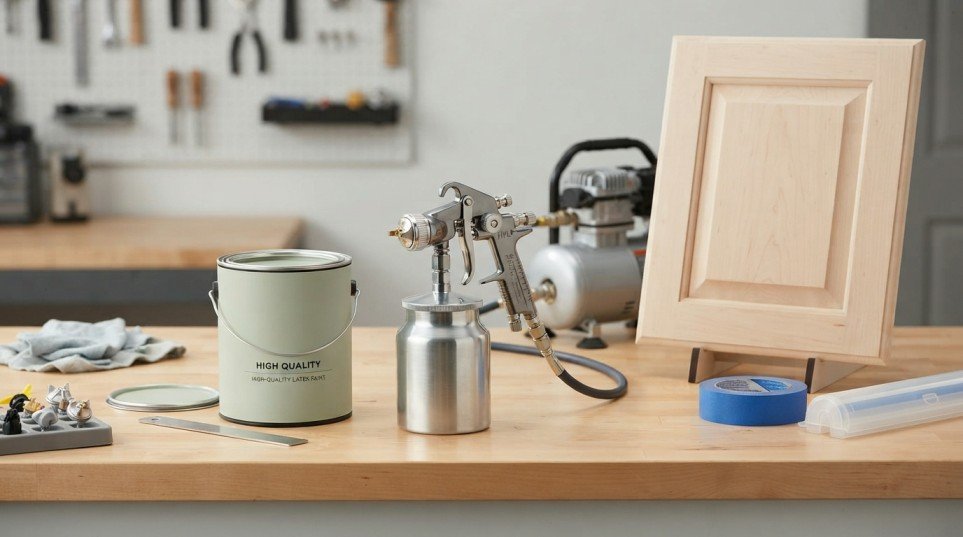
Painting with a spray gun can feel like magic. It turns thick paint into a fine fog and lays it down in a smooth, even coat. Yet that “magic” is not one trick. There are many spray gun types, each built for a certain job, speed, and finish quality. Pick the right type, and your work gets faster, cleaner, and better. Pick the wrong one, and you may battle clogs, runs, rough texture, and overspray. In this guide, you will learn the major types of spray guns, how they differ, and how to match them to your project, paint, and budget. We will keep the language simple, but the advice is expert and practical.
What Are the Different Types of Spray Guns?
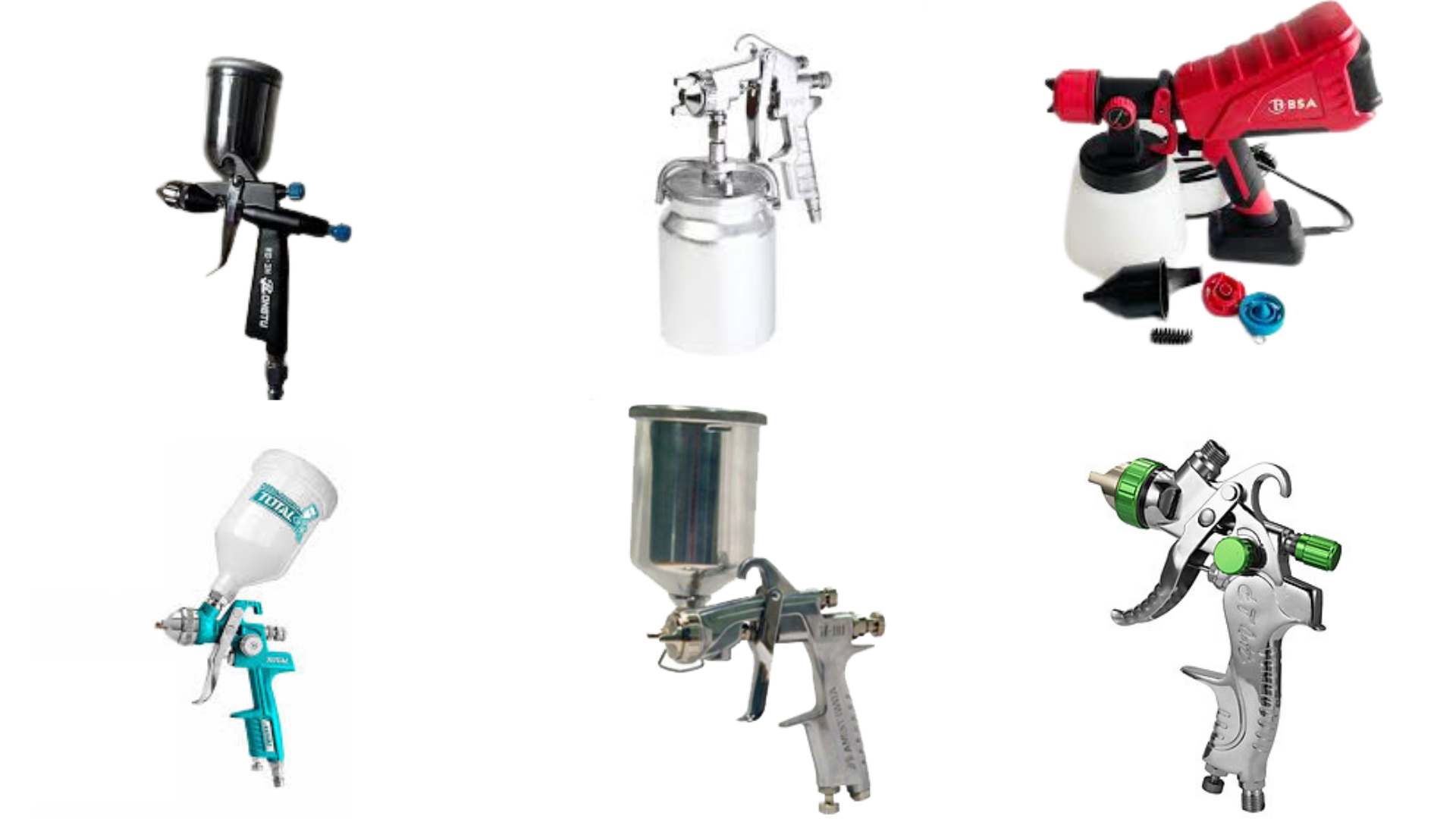
There are several major spray gun types. Each one atomizes paint in a unique way. Some use compressed air. Some use high fluid pressure. Others blend both. The best type for you depends on paint thickness, the size of the job, finish quality, and the tools you own. Below is a fast overview before we dive deeper.
The Main Spray Gun Types At a Glance
Here are the core categories you will see when you shop or ask a pro for advice.
- HVLP spray guns (High Volume, Low Pressure)
- LVLP spray guns (Low Volume, Low Pressure)
- Conventional air spray guns (compressed air)
- Airless paint sprayers
- Air-assisted airless sprayers
- Gravity-feed spray guns
- Siphon-feed spray guns
- Pressure-feed spray guns
- Handheld electric sprayers
- Pneumatic spray guns (air-powered, a broad class that includes HVLP/LVLP/conventional)
Note: Some of these are atomization types (HVLP, Airless). Some are feed types (gravity, siphon, pressure). Many spray guns combine an atomization method with a feed method. We will sort it out in plain terms.
Why there are so many spray gun designs
Spray guns are tools with a purpose. Different paints have different thickness (viscosity). Projects vary in size. Finish needs vary too. Some users need speed. Others need fine control and low overspray. Compressors also vary. This is why you see many designs and many labels. It is not hype. It is about matching the right method to the right task.
Spray gun vs paint sprayer — are they the same thing?
People often use these terms as if they mean the same thing. A “spray gun” is the hand-held gun at the end of a system. A “paint sprayer” can mean the full system: the gun plus the air or fluid source (compressor, turbine, or pump), hoses, cups, and tips. In common use, both terms overlap, and that is okay.
HVLP Spray Guns
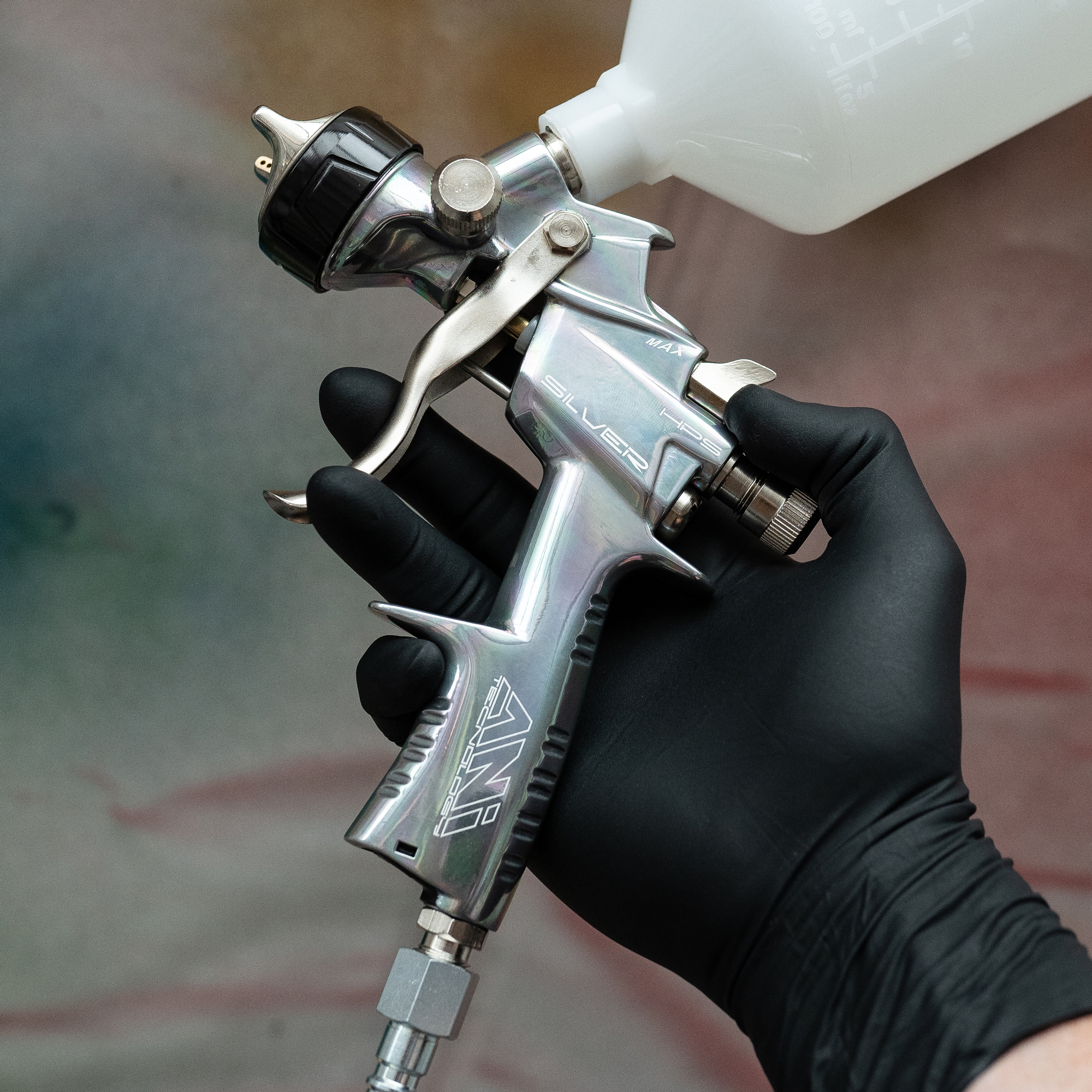
HVLP spray guns use a high volume of air at low pressure to atomize paint. They deliver a smooth finish with less overspray than old-school guns. HVLPs are popular for cabinets, trim, doors, furniture, and auto finishing. They can run from a turbine or an air compressor. They do best with medium to thin paints or thicker paints that are thinned and strained.
What does HVLP mean?
HVLP stands for “High Volume, Low Pressure.” The gun moves a lot of air but at a low cap pressure (usually 10 PSI or less at the air cap). That low pressure is what reduces overspray and bounce-back. It also improves transfer efficiency. More paint stays on the surface, and less floats off into the air.
Paint Sprayer Gun 101: (Types, Uses, and Expert Advice) Everything You Need to Know Before Buying
How an HVLP spray gun works
An HVLP gun mixes paint and air at the cap. The paint flows through a fluid nozzle. Air flows through small holes in the air cap around the nozzle. The gentle air breaks the paint into fine droplets (atomization). You can shape the spray pattern by turning the fan control. You dial fluid flow with the needle control. You adjust inlet air pressure with a regulator.
Advantages of HVLP spray guns
- Very good control for edges, trim, and detail.
- Lower overspray than conventional air guns.
- Fine finish on wood and metal with the right setup.
- Popular for DIY projects, cabinets, and clear coats.
- High transfer efficiency saves paint.
Disadvantages of HVLP spray guns
- Slower than airless on big surfaces.
- Can struggle with very thick paints (like heavy latex) unless thinned.
- Some setups need careful thinning and straining.
- Turbine HVLPs can be noisy and add hose clutter.
Best uses for HVLP spray guns
HVLP shines on smaller to mid-size projects where finish quality matters. Good matches include cabinets, furniture, trim, doors, shelves, built-ins, railings, and even automotive base and clear coats. Use the right needle, nozzle, and cap for your product. Strain your finish. Control your distance and speed.
HVLP turbine vs compressor HVLP
- Turbine HVLP: Uses a turbine blower to create warm, low-pressure air. It is portable and does not need a compressor. It can dry paint fast due to warm air. Downsides are hose heat, noise, and cost for high-end units.
- Compressor HVLP: Runs from a shop compressor. It is flexible and often cheaper if you own a compressor. You must size the compressor for the gun’s CFM needs.
Who should buy an HVLP spray gun?
Buy HVLP if you want a clean, controlled finish on cabinets, furniture, trim, or doors. It is ideal for DIYers who value low overspray and fine control. It is also a pro choice for wood shops and auto paint work. If you paint walls all day, HVLP is not the fastest, but it is still useful for detail and top coats.
LVLP Spray Guns
LVLP stands for “Low Volume, Low Pressure.” These guns use less air than HVLP while still spraying at low pressure. LVLP guns are great for smaller compressors and fine finish work. They can atomize with less CFM, which helps hobbyists. Finish quality can be excellent with the right setup and technique.
How LVLP spray guns work
LVLP guns use refined internal passages and tight air caps to atomize paint efficiently at low flow and low pressure. They often need 3.5–7.5 CFM at about 20–30 PSI inlet. This makes them friendly for smaller 20–30 gallon compressors. They still push paint at low cap pressure to reduce overspray.
HVLP vs LVLP spray guns
- Air demand: LVLP needs less CFM than most HVLP guns.
- Speed: HVLP can move a bit more material with a wider fan in many cases.
- Finish: Both can deliver a great finish with a good cap set and proper thinning.
- Overspray: Both aim for low overspray. LVLP has the edge in small shops with tight air budgets.
Advantages of LVLP guns
- Lower air demand. Good for small compressors.
- Fine control and smooth finish potential.
- Low overspray when dialed in right.
- Often lighter and simpler to tune.
Disadvantages of LVLP guns
- Not as fast as airless or some HVLPs on big areas.
- Can be sensitive to viscosity and setup.
- Fewer tip and cap options in some lines.
Best projects for LVLP spray guns
LVLP guns suit cabinets, furniture, trim, mirror frames, toys, craft projects, and small auto parts. They are great in small shops with limited power or a small compressor. They also fit tight spaces where overspray control matters.
What size compressor does an LVLP gun need?
Many LVLP guns can run on 4–7.5 CFM at 40 PSI. A 20–30 gallon compressor with 2–3 horsepower can often keep up for light duty. For long sessions, a 60-gallon, 5–6 CFM at 40 PSI or higher is better. Always match the gun’s spec sheet for CFM and PSI.
Is LVLP better than HVLP?
Neither is flat-out “better.” LVLP is better for small compressors. HVLP may be better for speed and broader patterns. Both can yield a great finish with good setup, clean air, the right tip, and proper paint prep. Choose based on your compressor, your project size, and your finish needs.
Conventional Compressed-Air Spray Guns
Conventional spray guns (also called standard or high-pressure air spray) use higher air pressure at the cap than HVLP or LVLP. They make a very fine finish but create more overspray. They are common in auto refinishing, metal finishing, and precise industrial work. They need larger compressors and clean air.
How conventional spray guns work
A conventional gun pushes atomizing air at higher pressure at the cap. That stronger blast breaks the paint into a fine mist fast. It lays down a glassy finish at speed. But more paint bounces off the surface, which means more overspray and waste.
Advantages of conventional air spray guns
- Very fine atomization for a high-gloss finish.
- Good for tricky shapes and complex geometry.
- Fast application speed on small to mid panels.
- Widely available for auto body and industrial use.
Disadvantages of conventional spray guns
- High overspray and lower transfer efficiency.
- Higher air demand (CFM) and larger compressors.
- More booth time, more masking, more cleanup.
- Can waste material if not tuned well.
Best application
Conventional guns shine in automotive painting, motorcycles, metal railings, machinery, and fine industrial coatings. Skilled painters can lay mirror finishes on fenders and hoods. They are less ideal for indoor walls where overspray control and dust matter more.
Why conventional guns create more overspray
The higher cap pressure creates a lot of paint bounce. When droplets hit the surface too hard, many do not stick. They bounce back into the air. This is “overspray” and lowers transfer efficiency. Good technique, right distance, and correct air pressure can help. But physics still wins here.
Airless Paint Sprayers
Airless paint sprayers push paint through a small tip at very high pressure, often 1,500–3,300 PSI. No air is used to atomize the paint. This creates fast coverage and thick wet film in one pass. Airless sprayers are great for big jobs like walls, ceilings, fences, decks, and siding.
How an airless paint sprayer works
An electric or gas pump pressurizes paint in a hose. The gun has a tip (orifice) that the paint passes through. The high pressure turns paint into a fan pattern. The tip size controls flow and the fan width. You can adjust pressure at the sprayer to match the coating and tip.
Advantages of airless sprayers
- Fast coverage on large surfaces.
- Can spray thicker paints, like latex, with no or minimal thinning.
- Good for primers, block fillers, and elastomerics with the right tip.
- Long hose runs let you spray whole rooms or exteriors.
Disadvantages of airless sprayers
- More overspray than HVLP or LVLP.
- More masking needed indoors.
- Safety risks: injection injury is serious.
- Not the best choice for a fine furniture finish.
Best uses for airless sprayers
Use airless for interior walls, ceilings, siding, fences, decks, barns, and other large surfaces. It is also great for doors and trim in batch runs, if you back-roll or dial in a fine finish tip. For speed and production, airless is hard to beat.
Airless spray tips and tip sizes
An airless tip number shows fan width and orifice size. For example, a 515 tip makes about a 10-inch fan (5 x 2) and has a 0.015-inch orifice. Common tips:
- 515/517 for wall paint and primers.
- 311/313/315 for trim and doors (finer fan).
- 619/621 for exterior siding or stains.
Pick the tip that matches paint thickness and your target fan size.
Airless sprayer pressure settings
Start low, then increase pressure until you see a clean, even fan with no “tails” or spitting. Many wall paints spray clean around 1,700–2,200 PSI with a 515/517 tip. Heavier coatings may need 2,400+ PSI. Always test on cardboard first.
Airless vs HVLP
- Speed: Airless wins for large, flat surfaces.
- Finish: HVLP often wins for furniture, cabinets, and clear coats.
- Overspray: HVLP wins for tight spaces and detail.
- Paint thickness: Airless handles heavier paints with less thinning.
Why airless sprayers are popular for large jobs
Time is money. Airless sprayers move a lot of paint fast. They also let you spray from a 5-gallon pail with long hose runs. You do one coat in minutes, not hours. That speed is why pros use airless for interiors and exteriors.
Air-Assisted Airless Spray Guns
Air-assisted airless blends both worlds. The pump pushes paint at moderate high pressure. A small amount of air at the cap fine-tunes the fan and softens the pattern. This hybrid yields higher transfer efficiency than straight airless and faster output than straight air atomized guns. It is common in shops that spray all day.
How air-assisted airless works
A pump feeds the paint at 600–1,200 PSI (often lower than pure airless). The gun has an air cap with small jets. These jets shape and refine the spray as it exits the tip. You adjust both fluid pressure and cap air to tune the fan edge and droplet size.
Airless vs air-assisted airless
- Airless: Highest production speed, more overspray, lower finish control.
- Air-assisted airless: Slightly slower, cleaner fan, higher transfer efficiency, more refined finish.
- HVLP: Slowest on big jobs, best control for fine finish.
Advantages of air-assisted airless systems
- Better finish quality than plain airless on wood and metal.
- Lower overspray than airless at the same output.
- Excellent for clear coats, stains, and industrial enamels.
- Great transfer efficiency saves material and cleanup time.
Disadvantages
- Higher cost. You pay for pump plus gun plus air supply.
- More complex setup and tuning.
- Not as portable as a simple handheld or small HVLP.
Best professional applications
Cabinet shops, millwork, furniture factories, metal fab shops, and industrial lines use air-assisted airless for speed and finish. It excels when you need both output and quality.
When is air-assisted airless worth it?
Choose this route when you spray many hours a week, use clear finishes, or need a higher-end finish than airless can give at speed. It is a pro tool that pays for itself in saved labor and material.
Gravity-Feed Spray Guns
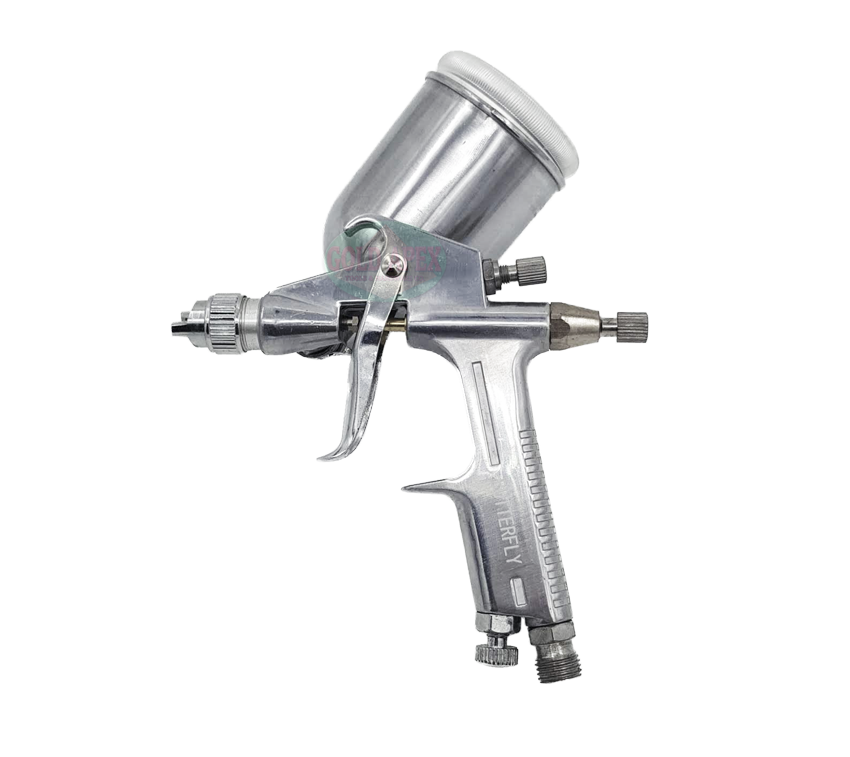
Gravity-feed guns hold paint in a cup on top of the gun. Paint flows down into the nozzle by gravity. Many modern HVLP and LVLP guns are gravity-feed. They reduce waste because you can spray with less paint in the cup. They are easy to clean and balance well in the hand.
How a gravity-feed spray gun works
The top-mounted cup vents air as paint flows down to the nozzle. The gun’s needle lifts to let paint flow. Air atomizes it at the cap. Because gravity helps, you can run lower fluid pressure. You also use nearly all of the paint in the cup.
Advantages of gravity-feed guns
- Less waste and easy color changes.
- Good for fine finish work and detail.
- Lower air and fluid pressures help reduce overspray.
- Comfortable and balanced for long sessions.
Disadvantages of gravity-feed guns
- Small cup size limits long runs.
- Can be top-heavy with a full cup.
- Not ideal for spraying upside down unless cup is sealed for it.
Best uses
Cabinets, furniture, doors, trim, and auto finishing. Great for clear coats, lacquer, and waterborne poly. A gravity HVLP is a go-to for wood shops.
Gravity-feed vs siphon-feed spray guns
Siphon-feed uses a bottom cup and venturi suction to pull paint up. Gravity-feed lets paint fall down. Gravity-feed runs lower pressure and wastes less paint. Siphon-feed can hold more paint and handle certain positions better. Gravity is the modern favorite for detail and finish quality.
Siphon-Feed Spray Guns
Siphon-feed guns have the cup below the gun. Air passing the nozzle draws paint up through a tube. This was the classic setup for decades. It still works well, but gravity-feed has grown more popular for small-shop finish work.
How siphon-feed guns work
The high-velocity air stream at the cap creates a pressure drop. That drop pulls paint up the siphon tube. The paint then mixes with air and sprays out in a fan pattern. You can use larger cups for longer runs.
Advantages
- Larger cup options for longer spray time.
- Stable balance when the gun is full.
- Widely available and often lower cost.
- Can be easier to spray in some angles than a gravity cup.
Disadvantages
- Needs more air pressure than gravity-feed to draw paint.
- Higher overspray potential.
- Leaves more paint in the cup when you are done.
- Cleanups can take longer.
Common applications
General purpose shop use, primers, furniture frames, and metal parts. You will still find many siphon-feed guns in auto shops and wood shops.
Are siphon-feed spray guns still worth using?
Yes, for certain needs. If you want a larger cup and do not mind the extra air pressure, they work well. But for fine finish and paint savings, gravity-feed has the edge today.
Pressure-Feed Spray Guns
Pressure-feed guns get paint from a pressurized cup or a pressure pot. The small tank pushes paint to the gun through a hose. This lets you spray for a long time without refilling a small cup. It also gives steady flow and control with thicker materials.
How pressure-feed spray guns work
A pressure pot or pressure cup has a regulator that sets fluid pressure. The gun may also get atomizing air from a compressor. You balance fluid pressure and atomizing air to get the pattern you want. This setup is common on production lines.
Pressure pot systems
A pressure pot can hold 2–10 gallons or more. It sits on the floor with dual regulators. One controls pot pressure. One controls atomizing air. The system feeds one or two guns at once. It is efficient for long, nonstop runs.
Advantages of pressure-feed guns
- Long spray times with no cup refills.
- Steady, consistent fluid delivery.
- Can move heavier coatings with proper setups.
- Great for production lines and large panels.
Disadvantages
- More complex gear and hoses.
- Higher cost and more maintenance.
- Longer setup and cleanup time.
Best applications
Cabinet shops, furniture factories, marine coatings, industrial primers, and long or repetitive runs. If you spray for hours, a pressure system pays off.
Handheld Electric Spray Guns
Handheld electric sprayers plug into the wall or run on a battery. They have a small turbine or piston pump built in. Many are compact and easy to use. They are good for small projects, fences, doors, and touch-ups. They are not pro guns, but newer models can perform well within their limits.
How handheld electric sprayers work
Two main types exist. Turbine-style units use a small blower to atomize paint (like a mini HVLP). Piston-pump units push paint through a tip at modest pressure (like a tiny airless). Both can be handy for small jobs.
Advantages of handheld sprayers
- Very portable and quick to set up.
- No separate compressor needed.
- Good for small projects and exterior touch-ups.
- Lower cost entry point for beginners.
Disadvantages
- Not as refined a finish as a pro HVLP gun.
- Limited tip sizes and small cups.
- Can struggle with thick latex without thinning.
- Heavier in hand when filled.
Best projects
Chairs, fences, shutters, doors, planters, radiator covers, shelving, garden furniture, and accent walls. Handy for stain and thin paints. Always strain your paint.
Corded vs cordless paint sprayers
Corded units run steady and have more power for the price. Cordless is great for mobility and ladders. Batteries add weight. Keep spare batteries charged for longer jobs. Match the tool line you already own.
Are handheld paint sprayers good for beginners?
Yes, for small tasks. They are forgiving. They teach you distance, speed, and overlap. Keep your expectations fair. They are not ideal for whole-house painting or show-room gloss on cabinets.
Pneumatic Spray Guns
“Pneumatic” means air-powered. Most HVLP, LVLP, and conventional spray guns are pneumatic. They use a compressor to provide clean, dry air. Pneumatic systems are flexible and have many tip and cap options. They are the standard in many shops.
How pneumatic spray guns work
A compressor fills a tank with pressurized air. Regulators and hoses feed the gun. The gun mixes air and paint at the cap and nozzle. You tune pressure, fan width, and fluid flow. The setup can be refined to suit thin dyes or thick primers.
What equipment does a pneumatic spray gun need?
- Air compressor sized for the gun’s CFM needs.
- Regulator and gauge at the gun handle.
- Moisture separator and possibly an air dryer.
- Hoses in good condition.
- Quality filters, strainers, and cups.
Advantages of pneumatic spray guns
- Great finish control and wide setup range.
- Many tip and cap choices for many coatings.
- Good for both DIY and pro shops.
- Easy to find replacement parts and service.
Disadvantages
- Requires a compressor with enough CFM.
- Noise and maintenance on the compressor.
- More gear to set up and move around.
Pneumatic vs electric spray guns
Pneumatic guns deliver a finer finish and more control, especially with HVLP and LVLP. Electric handhelds are faster to set up and more portable but less refined. Airless sprayers are fast for big jobs but use no air at the cap. Choose based on project and finish goals.
Electric vs Pneumatic Spray Guns
Many people ask whether to buy an electric sprayer or an air-powered gun. The right choice depends on your project size, finish needs, gear you own, and budget. Here is a clear, simple comparison.
Electric spray gun vs air compressor spray gun
- Electric (handheld or airless rigs): Faster setup. Good for big areas. Less fine control. Often more overspray (airless) or less refined atomization (handheld).
- Pneumatic (HVLP/LVLP/conventional): Slower setup. Best finish control. Needs a compressor and clean, dry air.
Setup time
Electric handhelds and airless rigs win on quick setup. Pneumatic guns take time to dial in. You need to tune air pressure, fluid flow, fan, and sometimes thinning.
Finish quality
Pneumatic HVLP/LVLP often deliver the smoothest finish on wood and auto panels. Airless can look great on walls but can leave a slight texture if not tuned. Handhelds are acceptable for small tasks but not top-tier finish.
Portability
Electric handhelds and cordless sprayers are the easiest to move. Airless rigs are also portable but heavier. Pneumatic guns need a compressor, so they are less mobile unless you have a small unit and short hose.
Noise
- Turbine HVLP: High-pitched blower noise.
- Airless: Pump noise plus spray hiss.
- Pneumatic: Compressor noise, which can be loud when it cycles.
Wear hearing protection if you spray often.
Maintenance
- Pneumatic: Clean the gun, keep air dry, service the compressor.
- Airless: Clean pumps and guns right away. Tips and filters need maintenance.
- Handheld: Clean the cup and nozzle, keep seals fresh, charge batteries.
Cost
- Handheld: Lowest entry cost.
- Pneumatic HVLP/LVLP: Moderate if you own a compressor.
- Airless: Moderate to high depending on size.
- Air-assisted airless and pressure pots: Highest cost, pro-grade.
How Spray Gun Types Differ by Paint Feed System
Feed systems move paint from the container to the nozzle. The three main feed styles are gravity, siphon, and pressure. Some guns also use side-mount cups. Your choice changes balance, setup, and material flow.
Gravity feed
The cup sits on top. Paint flows down into the gun. This helps with lower pressure spraying and reduces waste. It is popular for fine finishing and frequent color changes.
Siphon feed
The cup hangs below. Fast air at the nozzle draws paint up. This setup can hold more paint in bigger cups. It needs a bit more pressure to draw the paint.
Pressure feed
A sealed cup or pot pushes paint to the gun. It gives steady flow for long runs and thicker coatings. You set material pressure separate from atomizing air.
Side-feed spray guns
Some guns use a side-mounted cup that can swivel. This is useful for tight spots and odd angles. It combines some gravity benefits with flexible positioning.
Choosing a feed system for your project
- Short runs, fine finish, frequent color swaps: Gravity.
- Longer runs with a cup: Siphon.
- Very long runs or thick coatings: Pressure pot or pressure cup.
Balance ergonomics, cleanup time, and material flow needs.
How Spray Gun Types Differ by Atomization Method
Atomization is how a gun breaks liquid paint into tiny droplets. This is key for finish quality and overspray control. The main paths are air atomization, high-pressure fluid atomization, and a hybrid.
Air atomization
HVLP, LVLP, and conventional guns use air at the cap. Air mixes with paint and turns it into a spray. You tune air pressure, fluid flow, and fan shape. This method is great for fine finish and control.
High-pressure fluid atomization
Airless sprayers use fluid pressure only. Paint is forced through a small orifice at high PSI. It breaks into a fan pattern without air. This is very fast but can add overspray compared to HVLP.
Air-assisted atomization
Air-assisted airless uses both. The pump provides fluid pressure. A small amount of air sculpts the pattern. You get speed near airless and a cleaner fan edge.
Why atomization matters for finish quality
Droplet size, droplet speed, and pattern edge all affect leveling and gloss. Finer, softer atomization lets paint flow out smooth. Harsh, high-speed droplets can bounce and create texture. This is why air control and tip choice matter so much.
Spray Gun Types for Different Painting Jobs
Choosing the right tool for the task is half the battle. Here is a simple match chart in words. Pick based on speed, finish, location, and paint type.
Best spray gun type for walls
Airless sprayer for speed. Use a 515/517 tip for most wall paints. If you only have HVLP, thin and be patient, or roll.
Best spray gun type for ceilings
Airless for speed and coverage. Use an extension wand. Mask well to control overspray. Wear eye protection.
Best spray gun type for cabinets
HVLP or LVLP gravity-feed gun. Use fine filters and the right needle/nozzle. Strain paint. Practice on scrap doors first.
Best spray gun type for furniture
HVLP or LVLP for smooth, even coats on chairs, tables, and shelves. Use light passes and rotate parts on stands.
Best spray gun type for doors
HVLP/LVLP for high-gloss doors. Airless with a fine finish tip also works if you master your technique.
Best spray gun type for fences
Airless sprayer with a 515 or 619 tip. Use stain or thin paint. Work in sections and back-brush if needed.
Best spray gun type for decks
Airless sprayer or handheld for stains. Use a guard and spray shield to control overspray. Back-roll to push finish into boards.
Best spray gun type for cars
HVLP or conventional pneumatic guns in a clean booth. Use proper tips for base and clear. Follow the paint maker’s data sheet.
Best spray gun type for trim
HVLP or LVLP gravity-feed for crisp lines and minimal overspray. Use masks and spray shields on site.
Best spray gun type for small DIY projects
Handheld electric sprayer or a small LVLP. Strain paint, test your pattern, and keep passes light.
Best spray gun type for large projects
Airless sprayer or air-assisted airless for pro shops. You get fast output and a consistent finish with the right tip and pressure.
Spray Gun Types for Different Paints and Coatings
Paint thickness, solids, and solvents affect your choice. Always strain paint. Always check the maker’s tech sheet for tip size, thinning, and dry times.
Spray guns for latex paint
Airless is ideal. Use a 515/517 tip and 1,700–2,200 PSI. HVLP can spray latex if you thin and use a larger nozzle (e.g., 1.8–2.5 mm). LVLP may work with more thinning.
Spray guns for acrylic paint
Acrylics range from thin craft paint to thicker house paint. HVLP/LVLP can spray acrylics for fine finish if you thin and strain. Airless is great for acrylic wall paint.
Spray guns for enamel
Solvent or waterborne enamels spray well with HVLP/LVLP using 1.3–1.8 mm nozzles. Conventional guns can give a glassy finish too. Follow recoat times closely.
Spray guns for primer
Airless for fast build with wall primers. HVLP with 1.8–2.5 mm nozzles for cabinet primers. Pressure-feed for heavy industrial primers.
Spray guns for stain
HVLP, LVLP, or handheld sprayers for deck and fence stains. Use small tips or nozzles. Wipe or back-brush for even color.
Spray guns for lacquer
HVLP/LVLP gravity-feed is a classic match for lacquer. Use 1.3–1.5 mm for clears. Spray light, even coats. Allow proper flash.
Spray guns for polyurethane
HVLP/LVLP for thin poly or conversion varnish. Warm, dry air and clean fences reduce nibs. Strain twice. Watch humidity to avoid blush.
Spray guns for automotive paint
Basecoat/clearcoat systems favor HVLP or conventional guns with 1.2–1.4 mm tips. Follow booth temps and solvent flash times. Use a separate gun for clear to avoid contamination.
Spray guns for thicker coatings
Airless or pressure-feed is best for high-build primers, elastomerics, and mastics. Use large tips and hydrate filters often.
Why paint viscosity matters
Viscosity controls how paint flows, atomizes, and levels. Thick paint needs larger tips, more pressure, or thinning. Thin paint needs smaller tips and gentle air. Use a viscosity cup if you want to be precise.
How to Choose the Right Spray Gun Type
Use this quick flow to choose well:
- Project size: Big areas (walls, siding) favor airless. Small parts (cabinets, furniture) favor HVLP/LVLP.
- Finish quality: Highest gloss and smoothness point to HVLP/LVLP or conventional for auto.
- Paint thickness: Thick latex favors airless; thin lacquer favors HVLP.
- Gear you own: Compressor? Go pneumatic. None? Go electric handheld or turbine HVLP.
- Overspray limits: Indoors or tight spaces favor HVLP/LVLP.
Spray Gun Nozzles, Tips, and Spray Patterns
Your tip or nozzle set is your paint brush shape. It sets fan width, droplet size, and flow. For airless, the tip number shows fan and orifice. For HVLP/LVLP, the needle/nozzle size in millimeters matches viscosity. Keep spare tips and caps clean and labeled.
Spray Gun Air Pressure and CFM Requirements
Match your gun to your compressor. Many HVLP guns need 8–15 CFM at 20–40 PSI inlet, with 10 PSI at the cap. LVLP can use 4–10 CFM. Conventional may need 9–14+ CFM. Use a regulator at the gun handle. Use a moisture separator to avoid water in your paint.
Spray Gun Types and Overspray
Overspray is paint that misses the target and floats off. You pay for it with time, money, and cleanup. Atomization method, pressure, tip size, and distance all change overspray levels.
Which spray guns create the most overspray?
Conventional high-pressure air guns create the most. Airless comes next, especially at high PSI. HVLP and LVLP create the least when tuned right.
How HVLP reduces overspray
HVLP uses soft, low-pressure air at the cap. Droplets hit and stick instead of bouncing. More paint lands on the surface. Less fog hangs in the room.
Does airless spraying create overspray?
Yes. Airless uses high pressure. It can kick up a fog if pressure is too high or if the tip is too big. You can reduce it with lower PSI, the right tip, and a steady, close pass.
How to reduce overspray
- Use the smallest tip that still gives full coverage.
- Lower pressure until the fan is just clean (no tails).
- Keep 6–8 inches from the surface with steady speed.
- Mask well and use spray shields.
- Spray on calm days outdoors.
Common Spray Gun Mistakes Beginners Make
- Spraying too far from the surface. This wastes paint and makes dry spray.
- Holding the trigger the whole time. Learn to trigger on, pass, trigger off.
- Ignoring filters and strainers. Clogs kill patterns and slow you down.
- Using the wrong tip size for the paint.
- Skipping cleaning steps. Old paint ruins new jobs.
How to Get a Smooth Finish With Any Spray Gun
- Prepare the surface: sand, clean, and tack cloth.
- Strain the paint. Filter at the cup and gun.
- Test the pattern on cardboard. Tune pressure and flow.
- Spray light, even passes with 50% overlap.
- Keep your arm moving parallel to the surface. Do not arc your wrist.
- Respect flash times and cure windows.
Cleaning and Maintaining Different Spray Gun Types
- HVLP/LVLP: Flush with the correct solvent or water. Disassemble the cap and nozzle. Clean the needle. Lubricate threads with a non-silicone lube.
- Airless: Reverse and clean the tip. Run cleaner through the pump. Clean filters at the gun and manifold. Store with pump protectant.
- Handheld: Clean the cup, tip, and pickup tube. Check seals and screens.
- Pressure pots: Clean the pot, lines, and regulators. Replace lid gaskets as needed.
Spray Gun Safety
- Wear a proper respirator for the coating. Some solvents are hazardous.
- Wear gloves, eye protection, and hearing protection.
- Keep sparks and flames away from solvent fumes.
- For airless, never test for a leak with your hand. High-pressure injection can be severe. Seek medical help at once if it happens.
- Ventilate the area or use a filtered spray booth.
Spray Gun Types Comparison Chart
Below is a quick, high-level comparison. Always check the specs of the exact model you plan to buy.
HVLP vs LVLP vs airless vs conventional
Here is a simple chart to compare common choices.
| Type | Best For | Speed | Finish Quality | Overspray | Gear Needed | Paint Viscosity Tolerance |
|---|---|---|---|---|---|---|
| HVLP | Cabinets, trim, furniture | Medium | High | Low | Compressor or turbine | Medium (may need thinning) |
| LVLP | Small-shop fine finish | Medium-Low | High | Low | Small compressor | Medium-Low (may need more thinning) |
| Airless | Walls, ceilings, exteriors | Very High | Medium | Medium-High | Pump + tips | High (sprays thick paints) |
| Conventional | Auto, metal, gloss | Medium | Very High | High | Large compressor | Medium |
Frequently Asked Questions About Spray Gun TypesWhat is the best spray gun type for cabinets?
A: HVLP or LVLP gravity-feed with a 1.3–1.5 mm nozzle for paints and clears. Strain the finish. Use a regulator and moisture trap. Practice on a spare door to set speed and distance.
Can I spray latex with HVLP?
A: Yes, but often with thinning and a larger nozzle (1.8–2.5 mm). Warm the paint room and use a good filter. Multiple light coats help avoid runs.
What tip size do I need for airless interior paint?
A: A 515 or 517 tip is common. Start at about 1,800–2,000 PSI. Adjust for a clean fan with no tails. Test first.
Do I need a big compressor for HVLP?
A: Many HVLP guns need 8–15 CFM at 20–40 PSI. A 60-gallon, 2-stage compressor is great. LVLP can run on smaller compressors around 4–8 CFM.
Is airless good for trim?
A: Yes, with a fine-finish tip like 310–312 and lower pressure. Keep steady and back-brush if needed. HVLP still gives more control for detail.
What is transfer efficiency?
A: It is the percent of paint that lands on the surface vs. floating away. HVLP and air-assisted airless have higher transfer efficiency than conventional or high-pressure airless.
Can one spray gun do everything?
A: Not well. Airless is best for big jobs. HVLP/LVLP is best for fine work. You can own both or rent what you need for big jobs.
Should I thin paint for a handheld sprayer?
A: Often yes, especially for thicker latex. Follow the tool’s guide. Strain the paint and test your pattern. Add conditioner if allowed by the paint maker.
How do I stop orange peel?
A: Use the right tip/nozzle. Adjust pressure. Thin slightly if allowed. Spray closer with a steady pass. Keep room temp and humidity in the ideal range.
Are turbine HVLPs good?
A: Yes. They are portable and do not need a compressor. Higher-stage turbines (3–5+ stage) handle more coatings. They can be a bit noisy and warm the hose air.
Is spraying safe indoors?
A: Yes with good ventilation, masking, and the right respirator. Control overspray with low pressure and careful technique. Always follow safety data sheets.
What is the difference between a spray pattern and a fan width?
A: The spray pattern is the overall shape of the spray, often an oval. Fan width is the size of that oval at a set distance. You want an even pattern with no heavy edges or tails.
Final Buying Checklist for Choosing a Spray Gun
Use this list before you click buy:
- Project size and type: walls vs cabinets vs cars.
- Finish quality needed: production vs show finish.
- Paint type and viscosity: latex, enamel, lacquer, stain, poly, primer.
- Atomization method: HVLP/LVLP (air), airless (fluid pressure), or hybrid (air-assisted airless).
- Feed system: gravity, siphon, pressure pot, or handheld cup.
- Tips and nozzle sets: sizes in stock for your coatings.
- Compressor and power: check CFM and PSI for pneumatic; outlet and battery for electric.
- Overspray control: location and masking needs.
- Maintenance and cleanup time.
- Budget vs frequency of use: buy once, cry once for pro use; rent for rare big jobs.
When working with an HVLP, LVLP, airless sprayer, pneumatic spray gun, or turbine sprayer connected to an air compressor, pressure pot, spray tip, fluid nozzle, needle, air cap, regulator, and moisture separator, achieving the right atomization, paint viscosity, transfer efficiency, spray pattern, overspray, pressure, CFM, and PSI depends heavily on proper masking, surface preparation, thinning, straining, cleanup, drying, and curing, whether you are applying latex paint, acrylic paint, enamel, lacquer, polyurethane, primer, stain, automotive paint, or clear coat onto wood, metal, drywall, cabinets, furniture.
Conclusion
Spray gun types can look confusing at first. But now you know what each one does best. Choose airless for speed on big surfaces. Choose HVLP or LVLP for fine finishes on wood and auto work. Use the right feed system and tip for your coating. Keep your air clean and your gear maintained. With practice, your finish will look sharp, feel smooth, and stand the test of time.
One Comment
Comments are closed.