
The #9 Reasons Spray Gun Blowing Air: How to Fix an Air-Only Spray Gun Fast
A spray gun blowing air means blocked fluid flow, wrong pressure, or worn seals. If your spray gun is blowing air instead of paint, you are not alone. I have seen this on shop floors and in home garages. In this guide, I break down how the system works, the real causes, and the exact steps to fix it. You will learn how to diagnose, adjust, and prevent a spray gun blowing air with clear tips and proven methods.
How a spray gun works when it is blowing air
A spray gun mixes air and fluid at the tip. When air flows but paint does not, the airflow path is open. The fluid path is blocked or starved. That is the core reason for a spray gun blowing air.
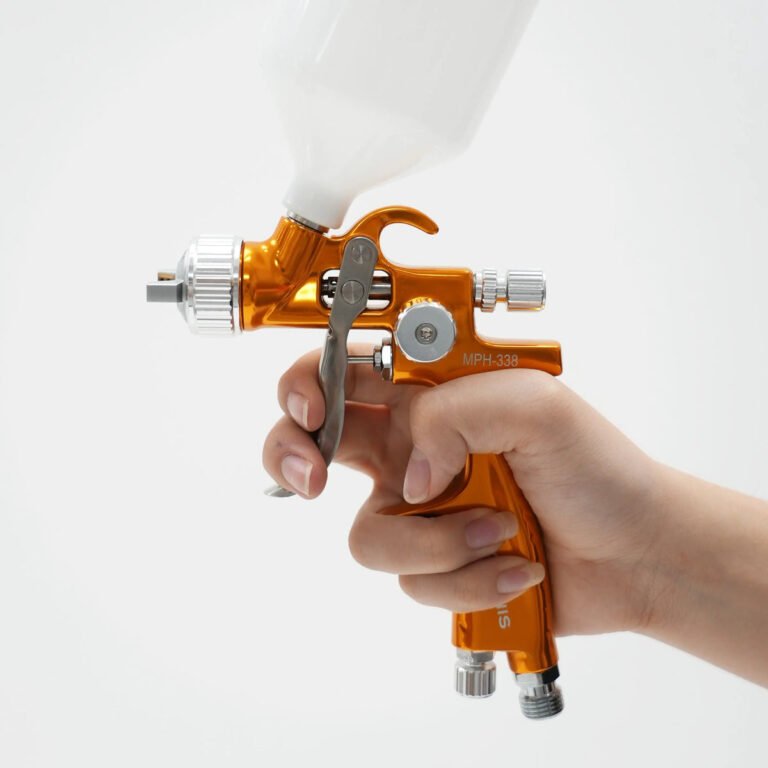
There are a few gun types. HVLP runs at low pressure and high volume. Conventional guns run higher psi. Gravity feed uses a top cup and needs a clear vent. Siphon feed uses a bottom cup and relies on vacuum. If that balance fails, you get a spray gun blowing air.
A correct setup has three parts: clean fluid path, stable air pressure, and the right needle and nozzle. If any one is off, the fan dies, and you get only air at the cap. That is why checks in the right order matter.
Common reasons a spray gun is blowing air but not paint
Many causes repeat across jobs. These are the usual suspects behind a spray gun blowing air.
- Empty cup or clogged vent The cup is low or the vent hole is blocked. Gravity and siphon guns both need a clear vent to feed paint.
- Dried paint in the nozzle Old material can glue the fluid tip shut. Even a thin skin can stop flow.
- Wrong viscosity The paint is too thick for your needle size or pressure. It sits in the cup and will not move.
- Worn or damaged seals The fluid needle packing or tip gasket leaks air. This breaks vacuum and reduces draw.
- Needle and nozzle mismatch The needle is too small or too large for the material. This harms atomizing and flow.
- Air pressure out of range Too low and it will not draw. Too high and it can blow back into the cup.
- Blocked fluid filter The gun filter or inline filter is clogged. Flow falls to a drip.
- Trigger or fan pattern issues The fan is closed, or the fluid control is wound tight. You get only air.
- Moisture or oil in air line Water or oil can thicken or curdle coatings. Flow stops at the tip.
Each of these can turn a fine fan into a spray gun blowing air. Fix the root cause. Do not mask it with more pressure.
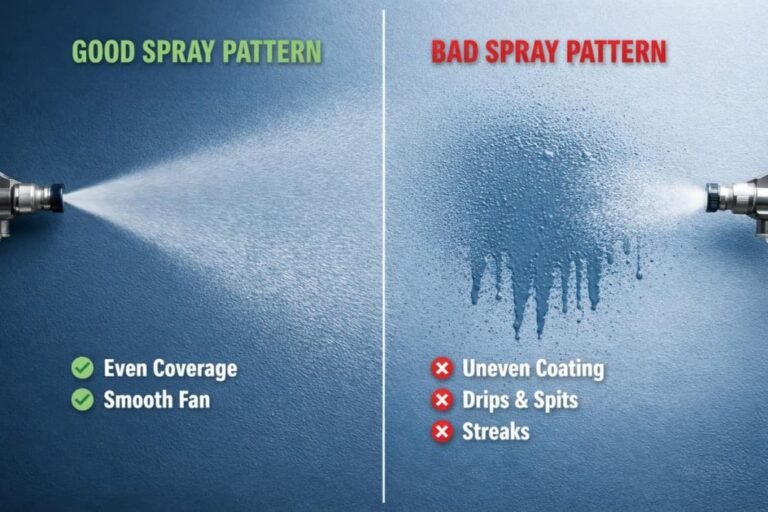
Spray Gun Troubleshooting: Quick Fixes for Spits, Sputters, and Uneven Sprays
Fast diagnostics you can run in minutes
A quick plan beats guesswork. Use these steps to find why your spray gun is blowing air.
- Check the cup Fill it halfway. Open or clean the vent. Squeeze the trigger. If paint starts, the vent was the issue.
- Remove the air cap Look at the fluid tip. Press the trigger. If nothing comes out, the tip or needle is blocked.
- Test with water or reducer Load water or approved reducer. If it sprays fine now, your paint is too thick or the filter is clogged.
- Pattern card test Hold a card 6 inches away. Fan on, fluid open two turns. If the fan is weak or split, clean the cap and tip.
- Bubble test For gravity guns, cover the vent and trigger. Bubbles in the cup mean air is leaking past seals.
- Air gauge check Use a gun gauge. Confirm inlet psi while spraying. Many HVLP guns run best around 18 to 25 psi at the gun inlet. Follow your gun spec.
These tests isolate the fault fast. They also prevent blind changes that make a spray gun blowing air even worse.
Fixes: settings, repairs, and best practices
Once you know the cause, fix it with simple steps. This is how I tune a spray gun blowing air back to life.
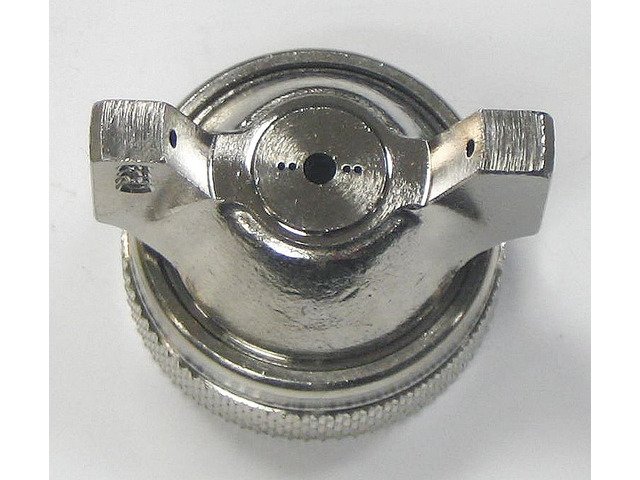
- Clean the cap and tip Soak in the right cleaner. Use a soft brush. Do not scratch the orifices.
- Open the fluid control Start at two turns out. Adjust while spraying a test panel.
- Set the fan control Open wide, then reduce to the width you need.
- Match needle and nozzle Pick the size your coating needs. For thin stains, try 1.2–1.3 mm. For most paints, 1.3–1.5 mm. For primers, 1.7–2.0 mm. Follow the data sheet.
- Adjust pressure Use the lowest pressure that gives a full, even fan. HVLP often runs 18–25 psi at the gun inlet. Conventional may need 35–50 psi. Check the maker guide.
- Fix seals and packings Replace worn tip gaskets, air cap seals, and needle packings. A small leak can cause a spray gun blowing air to persist.
- Clear or replace filters Clean the gun filter. Change the inline filter. Drain water traps.
- Thin by spec Use a viscosity cup. Many water-based paints run best near 20–30 seconds in a #4 Ford cup. Use only approved thinner.
Pro tip: Always tune with the same hose, regulator, and product you will use on the job. Small changes here can trigger a spray gun blowing air again.
Preventive maintenance to stop a spray gun blowing air
Care is cheaper than repairs. A clean gun is a happy gun.
- Daily routine Flush the gun right after use. Wipe the needle. Clean the cap holes with a soft pick.
- Weekly routine Strip the gun. Soak the metal parts. Check seals. Lightly lube threads and the needle spring with gun-safe oil.
- Air system care Drain the compressor tank. Purge water traps. Replace desiccant as needed.
- Storage Leave the fluid control relaxed. Store caps dry and clean.
- Product habits Strain paint through a fine mesh. Keep lids on cups. Label mix dates.
These simple steps reduce clogs, leaks, and the risk of a spray gun blowing air in the middle of a job.
Safety, health, and compliance checkpoints
Safety is part of skill. Keep risk low and results high.
- Wear PPE Use a proper respirator, gloves, and eye protection. Some coatings are harsh even at low overspray.
- Ventilation Spray in a ventilated booth or open, filtered space. Avoid ignition sources near solvent vapors.
- Pressure and hoses Inspect hoses, couplers, and gauges. A sudden burst is worse than a spray gun blowing air.
- Disposal Follow rules for solvents, rags, and filters. Store waste in rated cans.
Solid habits protect you, your team, and your work.
Picking the right setup for your material and job
The right match makes spraying easy. The wrong one creates a spray gun blowing air.
- Compressor and CFM Check your gun’s air volume need. Many HVLP guns need 8–14 CFM at 40 psi. A small compressor may starve the gun.
- Hose and fittings Short, wide hoses drop less pressure. Quick connects should match flow. Use a regulator at the gun.
- Filters and dryers Moisture ruins flow and finish. Use a water trap and a fine filter near the gun.
- Cup choice Gravity cups feed well for fine work. Pressure feed cups help with thicker coatings.
If you pair the tool, the air, and the coating, you avoid the pain of a spray gun blowing air when the clock is ticking.
Field notes: real examples of a spray gun blowing air
A trim job ran smooth until lunch. After the break, the gun only blew air. The vent hole on the gravity cup was clogged with dried primer dust. A quick clean fixed it in seconds. Lesson learned: clean the vent every refill.
On a cabinet set, the fan faded and the pattern split. It felt like a spray gun blowing air with weak draw. The inline filter was packed with flakes from an old line. We changed the filter and drained the tank. The fan came back sharp. Lesson learned: even clean paint fails if the air is dirty.
Frequently Asked Questions of spray gun blowing air
Why is my spray gun blowing air but not paint?
The fluid path is blocked or starved. Check the cup vent, fluid tip, and filters, and make sure the paint is not too thick.
What pressure should I set for HVLP?
Many HVLP guns work between 18 and 25 psi at the gun inlet. Always confirm with your gun manual and test on a card.
How do I know if my nozzle size is wrong?
If flow is weak at any setting, the size is likely too small. If atomizing is poor and runs appear, it may be too large.
Can moisture cause a spray gun blowing air?
Moisture will not stop air flow, but it can ruin atomization. It also clogs filters and thickens some coatings, which blocks the tip.
Should I thin the paint to fix this problem?
Thin only to the product data sheet. Over-thinning can cause poor coverage and sags without solving the root cause.
How often should I replace seals and packings?
Inspect monthly if you spray often. Replace at signs of leaks, drag on the needle, or when pattern tuning no longer holds.
Does hose length affect my spray gun?
Yes. Long, narrow hoses drop pressure and volume. Use the shortest, widest hose that is practical for steady flow.
Conclusion
A spray gun blowing air is a symptom, not a mystery. Clear the vent, clean the tip, match the nozzle, set the pressure, and keep the air dry. Small checks in the right order save time, paint, and stress.
Take ten minutes to run the tests in this guide before your next job. Your fan will be even, your finish will be smooth, and your workflow will be calm. Want more tips like this? Subscribe for fresh guides, or leave a comment with your setup and results.
2 Comments
Comments are closed.