The Hidden 7 Reasons Spray Gun Narrow Spray Pattern (How to Fix It Fast)
A spray gun narrow spray pattern gives better control for edges, trim, detail work, and small painted areas. A spray gun narrow spray pattern can make the difference between clean, controlled coverage and a messy cloud of overspray.
It is useful for furniture edges, automotive parts, cabinets, touch-ups, and other jobs where a wide fan wastes material. This guide explains how narrow patterns work, why they happen, how to adjust them, and when to use them for the best finish.
What Is a Spray Gun Narrow Spray Pattern?
A spray gun narrow spray pattern is a thin, focused fan of coating that leaves the nozzle. Instead of spreading paint across a wide area, the spray stays concentrated in a smaller path.
The pattern is controlled by the gun’s air cap, fluid nozzle, fan-control valve, air pressure, paint thickness, and spray distance. When these parts work together, the gun produces an even shape with soft edges and steady paint flow.
A narrow spray pattern is not always a problem. In many cases, it is the right choice for:
- Cabinet frames and door edges
- Chair legs and table parts
- Automotive trim
- Small metal parts
- Repair work
- Stencils and detail areas
- Tight corners and narrow surfaces
Think of the spray fan as a flashlight beam. A wide beam covers more space, while a narrow beam gives you better aim. The same idea applies to spray painting.
However, a spray gun narrow spray pattern can also signal an adjustment issue. If the pattern is too thin, uneven, or heavy in the center, the coating may not atomize correctly.
How a Spray Gun Creates Its Spray Pattern
A spray gun uses compressed air and fluid pressure to break liquid coating into small droplets. These droplets form the spray fan as they leave the air cap.
The air cap has small air holes called horns or side ports. These holes push air against the fluid stream and shape it into a round, oval, or fan pattern.
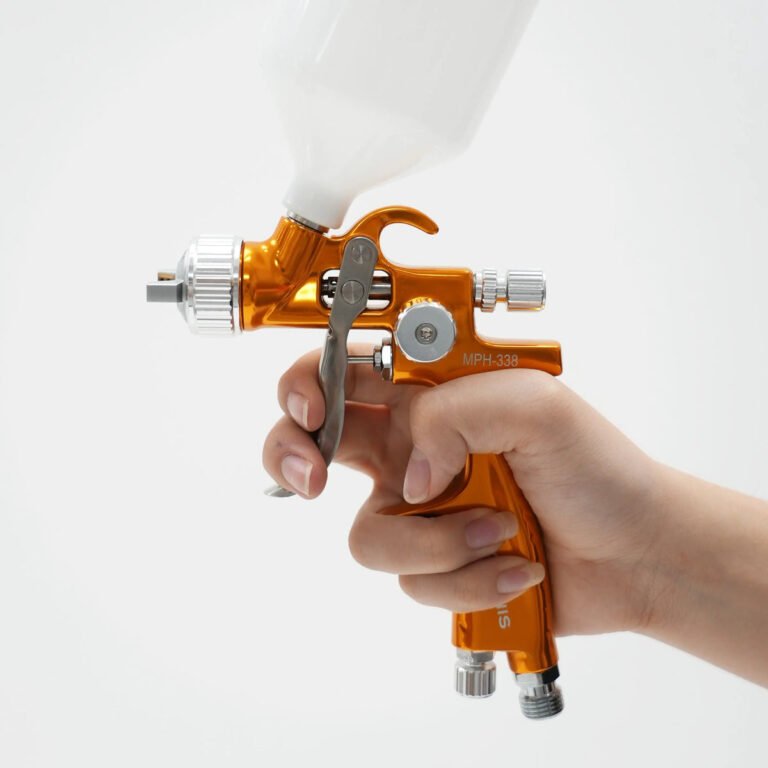
The main parts that affect the pattern include:
- Air cap: Shapes the spray and controls atomizing air.
- Fluid nozzle: Controls the amount of material leaving the gun.
- Needle: Opens and closes the fluid path.
- Fan-control valve: Changes the spray from wide to narrow.
- Air regulator: Controls air pressure at the gun.
- Fluid adjustment: Limits or increases material flow.
When the fan-control valve is partly closed, the spray gun narrow spray pattern becomes smaller. When the valve is opened, the air horns create a wider fan.
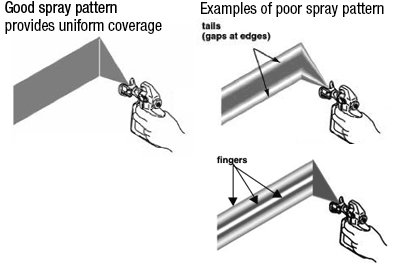
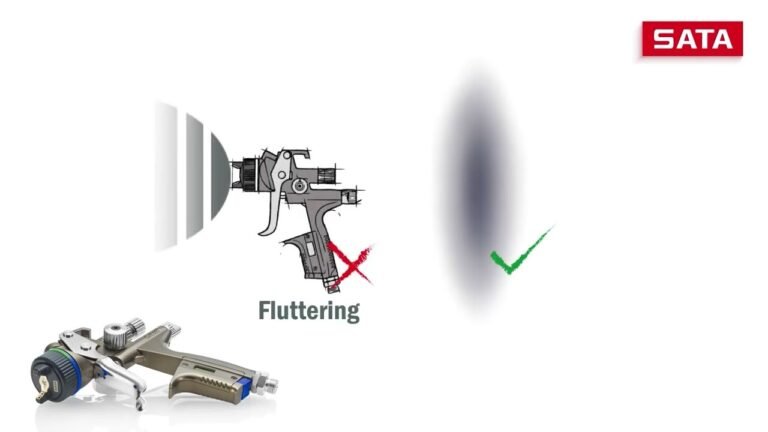
A properly adjusted narrow pattern should still look smooth and balanced. It should not look like a round blast with thick paint in the center. The outer edges should blend gently into the surrounding area.
Different spray gun types create patterns in slightly different ways. Conventional spray guns often use higher air pressure. HVLP guns use more air volume and lower fluid pressure. LVLP guns use less air volume while still aiming for efficient transfer.
The basic adjustment method is similar, but the recommended pressure varies by model. Always check the spray gun manufacturer’s instructions before changing pressure or nozzle settings.
Why Is Your Spray Gun Pattern Problems? (How to Fix Bad Fans)
Why Is My Spray Gun producing a Narrow Spray Pattern?
Several factors can cause a spray gun narrow spray pattern. Some are normal settings, while others point to dirt, wear, or poor material preparation.
The fan-control valve is too closed
This is the simplest cause. If the fan-control knob is turned too far toward the narrow setting, the gun will produce a small pattern.
Open the fan control slowly while spraying onto test paper. Stop when the pattern becomes wide enough for the job but still easy to control.
The air cap is dirty
Dried paint can block one or more air holes in the cap. When this happens, the air pressure becomes uneven and the pattern may shrink, tilt, or develop heavy edges.
Clean the air cap after each use. Use the correct cleaning solution and a soft brush. Avoid using hard wire because it can damage the air holes and permanently change the pattern.
The air pressure is too low
Low pressure may prevent the gun from forming a full fan. The result can be a weak, narrow, or poorly atomized spray.
Pressure should be measured at the gun inlet while the trigger is pulled. Static pressure readings can be misleading because the pressure drops when air begins to flow.
The fluid is too thick
Thick paint resists atomization. The gun may produce large droplets, poor coverage, and a narrow center-heavy pattern.
Use the coating maker’s thinning instructions. Do not add solvent by guesswork. Too much thinner can cause runs, poor hiding, color changes, or weak film strength.
The nozzle or needle is worn
A worn fluid nozzle can change the way paint exits the gun. The needle may also fail to seal or center properly.
If cleaning does not restore the pattern, inspect the nozzle and needle for wear. Replace matched parts when the manufacturer recommends doing so.
The air cap is loose or damaged
A loose air cap can leak air and disrupt the fan. A dented cap may also create an uneven pattern.
Make sure the cap is clean, properly seated, and tightened by hand. Do not force it with pliers.
The compressor cannot supply enough air
A small compressor may show a high tank rating but fail to deliver enough air during spraying. When the air supply drops, the pattern can become narrow and unstable.
Check the gun’s required cubic feet per minute, or CFM, against the compressor’s delivered CFM. The compressor should provide more air than the spray gun requires, not merely the same amount.
Benefits of Using a Narrow Spray Pattern
A spray gun narrow spray pattern offers several practical benefits when the job calls for accuracy.
Better control
A narrow pattern lets you aim the coating at a smaller surface. This helps when painting trim, corners, edges, and small parts.
It also reduces the chance of coating nearby areas by mistake. This matters when one part is already finished or when different colors sit close together.
Less overspray
A small fan can reduce wasted material. Less coating floats through the air and lands on nearby surfaces.
Less overspray can also make cleanup easier. Still, you must use proper ventilation and respiratory protection. A narrow pattern does not make spray paint harmless.
Easier touch-ups
Small repairs often need a focused spray. A wide fan may create a visible halo around the repair area. A narrow fan helps blend the new coating into the old surface.
Use light passes and expand the pattern slightly as you move away from the repair. This creates a softer transition.
Better work on narrow parts
A wide fan can spray beyond a narrow rail or pipe. A spray gun narrow spray pattern keeps more of the coating on the part.
This is helpful for:
- Window frames
- Metal tubing
- Cabinet edges
- Furniture spindles
- Motorcycle parts
- Small machine components
More precise detail work
Artists, model makers, and restoration workers often need controlled paint placement. A narrow pattern gives them more command over lines, shading, and small areas.
The trade-off is speed. A narrow pattern covers less area, so large panels take longer.
Limitations of a Narrow Spray Pattern
A spray gun narrow spray pattern is not ideal for every project. It can create problems when used on broad surfaces.
The main limitation is slower coverage. You may need many more passes to cover a door, hood, wall panel, or large cabinet side.
A narrow pattern can also cause heavy buildup if you move too slowly. Because the paint is concentrated in a small area, a single pass may apply more material than expected.
Watch for these problems:
- Runs and sags
- Heavy center coverage
- Visible stripes
- Uneven gloss
- Dry spray around the edges
- Excessive overlap
- Longer finishing time
The best solution is not always to open the fan fully. Instead, match the pattern to the surface size.
Use a narrow fan for narrow parts. Use a medium or wide fan for broad, flat areas. The ideal pattern is wide enough to cover efficiently but small enough to keep the spray under control.
How to Adjust a Spray Gun Narrow Spray Pattern
Proper adjustment starts with a clean gun and correctly prepared coating. Do not try to solve every pattern problem by changing air pressure.
Follow these steps:
- Clean the air cap, nozzle, and fluid path.
- Strain the coating to remove lumps or dried particles.
- Set the fluid control to a moderate opening.
- Set the fan control to a narrow or medium position.
- Adjust air pressure according to the gun manual.
- Hold the gun about 6 to 8 inches from the test surface, unless the manufacturer states otherwise.
- Pull the trigger fully and spray onto masking paper.
- Check the shape, paint density, and atomization.
- Open the fan slowly until the pattern suits the job.
- Adjust fluid flow in small steps.
The trigger should be fully pulled while spraying. Partly pulling the trigger can reduce air and fluid flow at the same time, which may create poor atomization.
Hold the gun square to the surface. Do not swing your wrist in an arc. Keep the gun parallel and move your whole arm at a steady speed.
A useful test pattern looks like a smooth oval. The center should not be much darker than the edges. If the center is heavy, reduce fluid flow, increase atomizing air slightly, or check for a blocked air cap.
If the pattern is narrow but even, the fan setting may simply be correct for your work. If it is narrow and lopsided, look for dirt, damage, pressure loss, or an uneven nozzle.

Choosing the Right Fan Width
The correct fan width depends on the object, coating, and spray gun. There is no single setting that works for every job.
For small parts, start with a narrow fan. For medium surfaces, use a medium fan. For large panels, use a wider fan to reduce the number of passes.
A simple guide looks like this:
- Small parts: Narrow pattern and slower movement
- Furniture edges: Narrow to medium pattern
- Cabinet doors: Medium pattern
- Car panels: Medium to wide pattern
- Large flat surfaces: Wide pattern with consistent overlap
The coating also matters. Clear coats often need smooth, even coverage. Thick primers may need a larger fluid nozzle and slower atomization. Water-based paints may respond differently from solvent-based coatings.
Always test on scrap material or masking paper first. A five-second test can prevent an hour of sanding.
In my own testing, one common mistake is setting the fan too wide because the operator wants faster coverage. That often leads to overspray and dry edges. A controlled medium pattern usually gives a cleaner result than a poorly managed wide one.
Spray Distance, Speed, and Overlap
Even a well-adjusted spray gun narrow spray pattern can produce a poor finish if your technique is inconsistent.
Keep a steady distance from the surface. Moving too close makes the coating wet and heavy. Moving too far allows the droplets to dry before they reach the surface.
Spray speed also affects film thickness. Move too slowly, and the surface may sag. Move too quickly, and the coating may look dry or thin.
Use a consistent overlap between passes. Many professional painters begin with about 50 percent overlap, then adjust based on the coating and surface.
For a narrow pattern, 50 percent overlap can create heavy buildup if the fan is very small. Watch the surface as you work. The correct overlap depends on the pattern shape and wetness.
Helpful technique tips include:
- Start moving before pulling the trigger.
- Release the trigger just before stopping the arm.
- Keep the gun square to the surface.
- Use smooth, straight passes.
- Avoid stopping over the workpiece.
- Check the wet edge often.
- Use proper lighting to spot dry areas and runs.
Imagine painting with a small broom. If every stroke has the same speed, angle, and overlap, the finish becomes even. If the stroke changes each time, the surface shows it.
Correct Air Pressure and Material Flow
Air pressure and material flow must work as a pair. Too much air can create dry spray and overspray. Too little air can cause large droplets and a weak pattern.
The correct setting depends on the gun design. HVLP spray guns often operate at lower pressure at the air cap, but they may need high air volume from the compressor. Conventional guns may use higher pressure.
Begin at the lower end of the recommended range. Increase pressure only until the coating atomizes cleanly.
Material flow should also be adjusted gradually. Open the fluid control until the spray looks even, then stop. More paint does not always mean better coverage.
If the gun produces a spray gun narrow spray pattern with a heavy center, try these checks:
- Reduce fluid flow slightly.
- Confirm the air cap is clean.
- Increase air pressure within the safe recommended range.
- Check for thick or cold material.
- Inspect the nozzle and needle.
- Confirm that the compressor maintains airflow.
Do not exceed the maximum pressure listed by the manufacturer. Excess pressure can increase overspray, reduce transfer efficiency, and create unsafe working conditions.
Cleaning and Maintenance Tips
Routine maintenance is one of the best ways to preserve a stable spray pattern. Paint residue can change the airflow and fluid delivery after only one use.
Clean the gun as soon as possible after spraying. Dried coating is harder to remove and may require aggressive tools that damage precision parts.
A basic cleaning routine includes:
- Empty unused coating from the cup.
- Wipe the cup and lid.
- Add the correct cleaning fluid.
- Spray the fluid into a suitable waste container.
- Remove and clean the air cap.
- Clean the fluid nozzle and needle.
- Inspect seals and threads.
- Dry the parts before reassembly.
- Add approved lubricant where the manual allows it.
- Store the gun in a clean, dry place.
Never soak every part in solvent without checking the manual. Some seals and plastic parts can swell or weaken.
Avoid placing the air cap face down on a dirty bench. A tiny piece of grit can block an air hole and change the spray gun narrow spray pattern on your next job.
Safety When Using a Narrow Spray Pattern
A narrow spray pattern can reduce overspray, but it does not remove the risks linked to spray finishing. Paint mist can harm the lungs, eyes, and skin. Some coatings also contain flammable solvents.
Work in a properly ventilated area. Use the personal protective equipment listed on the coating safety data sheet.
Important safety steps include:
- Wear a properly fitted respirator approved for the coating.
- Use chemical-resistant gloves.
- Protect your eyes and exposed skin.
- Keep flames, sparks, and smoking materials away.
- Use suitable ventilation.
- Ground equipment when required.
- Store coatings in approved containers.
- Follow the product safety data sheet.
- Never spray near food, children, or pets.
Do not rely on smell to judge exposure. Some harmful vapors may not have a strong odor.
For professional shops, local workplace rules may require specific spray booths, filters, respirators, and fire controls. Home users should follow the same basic principle: control the air, protect your body, and read the coating instructions before spraying.
Common Mistakes to Avoid
Many spray pattern problems come from simple habits rather than defective equipment.
The first mistake is changing several settings at once. If you adjust air pressure, fluid flow, fan width, and paint thickness together, you will not know which change helped.
Make one adjustment at a time. Spray a test pattern after each change.
Another mistake is skipping filtration. Even a new can of paint may contain small particles or dried skin. Strain the material before pouring it into the gun.
Other mistakes include:
- Spraying too close to the surface
- Holding the gun at an angle
- Using a dirty air cap
- Ignoring compressor CFM
- Spraying with an almost empty cup
- Using the wrong thinner
- Moving at an uneven speed
- Trying to cover a large panel with a tiny fan
- Failing to test the coating first
One lesson worth remembering is that a narrow pattern magnifies poor technique. A small change in distance or speed can produce a large change in film thickness. Slow down, test often, and let the equipment work as designed.
Frequently Asked Questions About Spray Gun Narrow Spray Pattern
Why is my spray gun pattern too narrow?
The fan-control valve may be too closed, or the air cap may be dirty. Low air pressure, thick paint, a weak compressor, or a damaged nozzle can also restrict the pattern.
How do I make a spray gun pattern wider?
Open the fan-control valve gradually and test the spray on paper. If the pattern stays narrow, clean the air cap, confirm air pressure at the gun, and check the nozzle for damage.
Is a narrow spray pattern good for painting cars?
A narrow pattern is useful for trim, corners, small repairs, and detail work. For large vehicle panels, a medium or wide pattern usually provides faster and more even coverage.
What causes a heavy center in the spray pattern?
A heavy center may result from too much fluid, low atomizing air, thick material, or a partially blocked air cap. Reduce fluid flow slightly and clean the air cap before making larger adjustments.
Can a narrow spray pattern reduce overspray?
Yes, a narrow pattern can reduce overspray because it directs more material into a smaller area. It still requires proper ventilation, personal protection, and careful control of pressure and spray distance.
How far should I hold a spray gun from the surface?
Many spray guns work well at about 6 to 8 inches from the surface, but the correct distance depends on the gun and coating. Follow the manufacturer’s instructions and confirm the setting with a test spray.
Why is my narrow spray pattern uneven?
An uneven pattern often comes from blocked air holes, a loose air cap, a damaged nozzle, low air supply, or poor material flow. Clean and inspect the gun before replacing parts.
Conclusion
A spray gun narrow spray pattern gives you control, accuracy, and less overspray when the job involves small parts, edges, trim, or repairs. It works best when the air cap is clean, the material is prepared correctly, and the gun is held at a steady distance.
Match the fan width to the surface instead of forcing one setting for every project. Test the spray, change one adjustment at a time, and use safe ventilation and protective equipment. With a few careful habits, you can turn a spray gun narrow spray pattern into a reliable tool for clean, professional-looking finishes.
Try these steps on scrap material before your next project, and share your results or questions with other spray-painting readers.